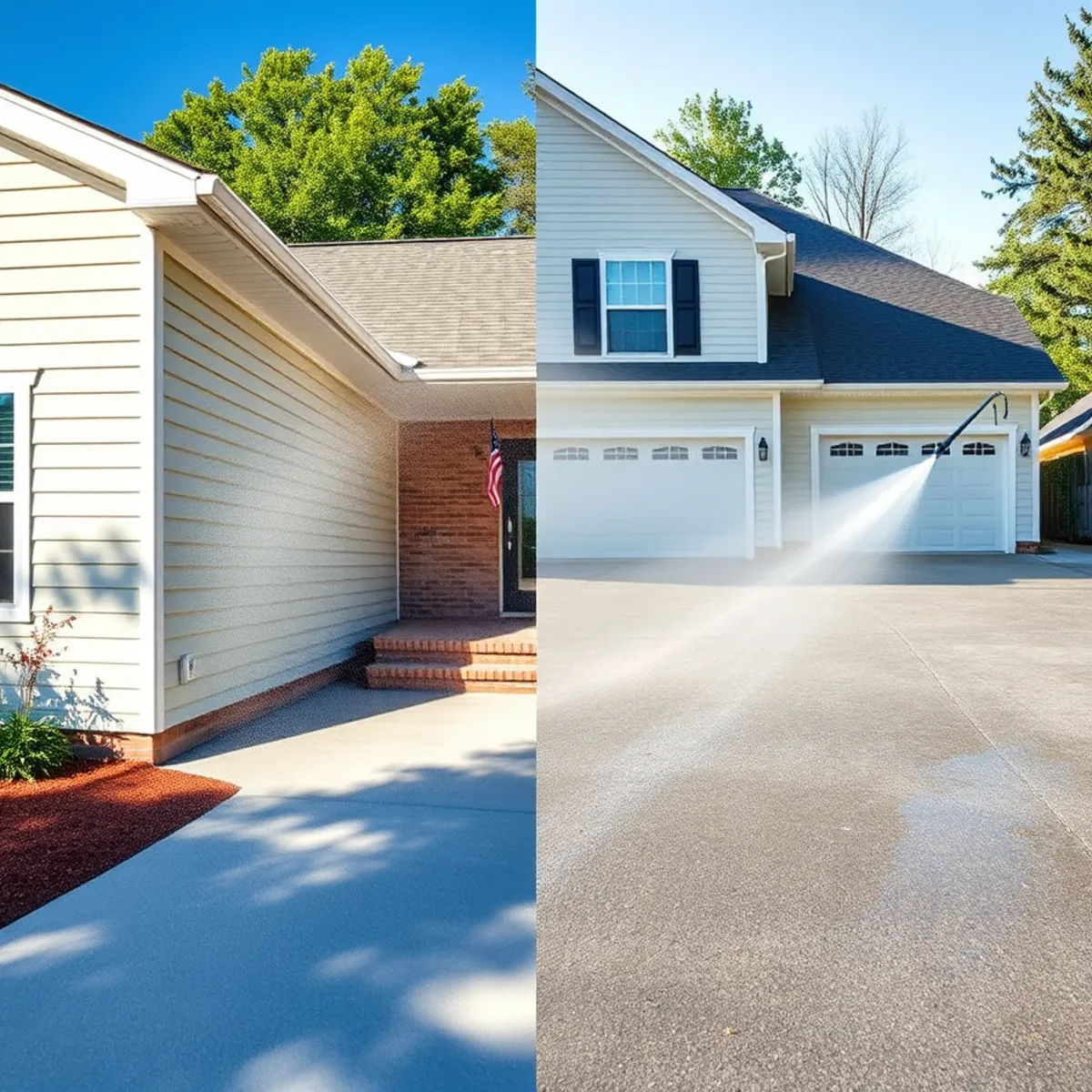
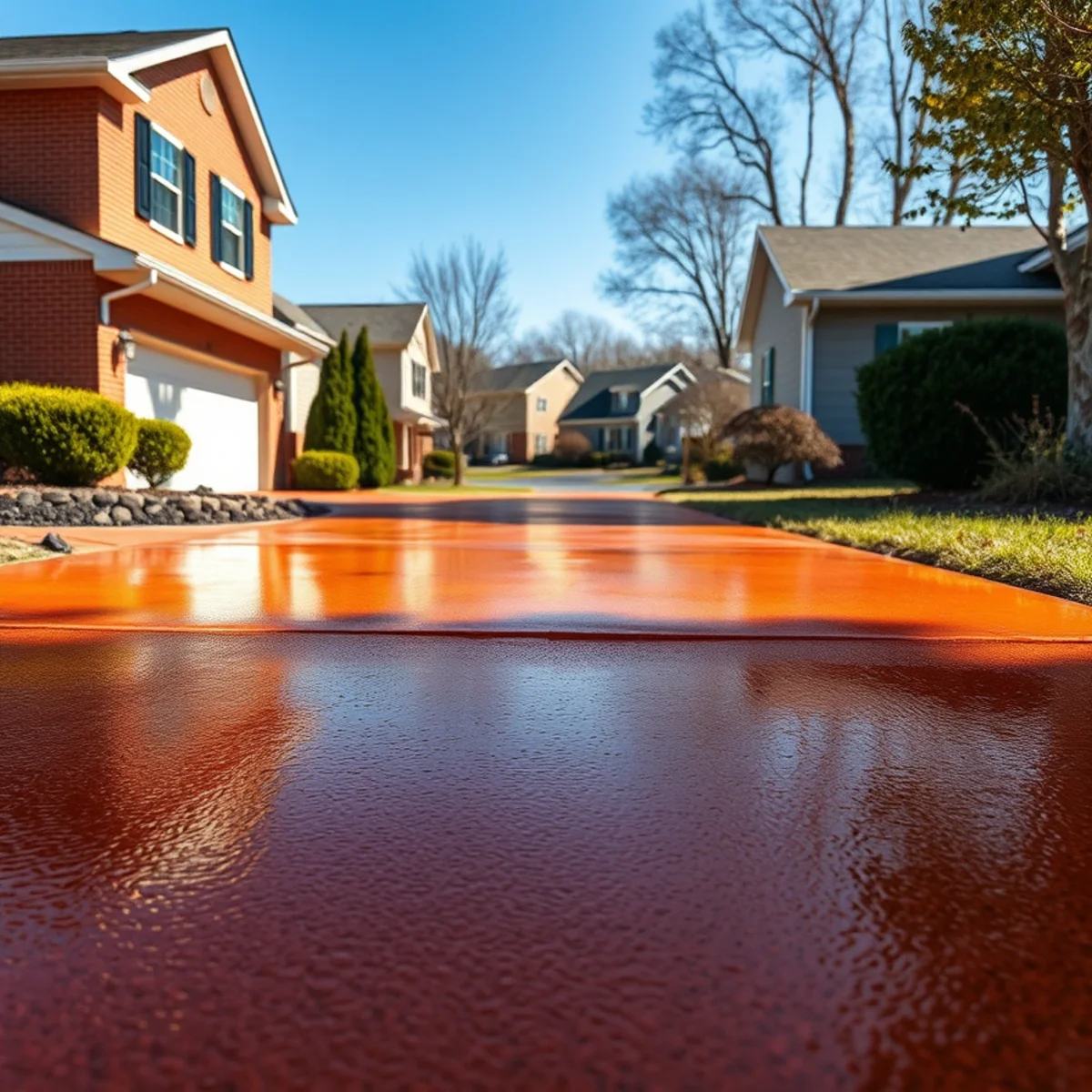
That orange film on your concrete after a Lincolnton rain is iron oxide. Here's what's really causing it, why it keeps coming back, and how to remove it for good.
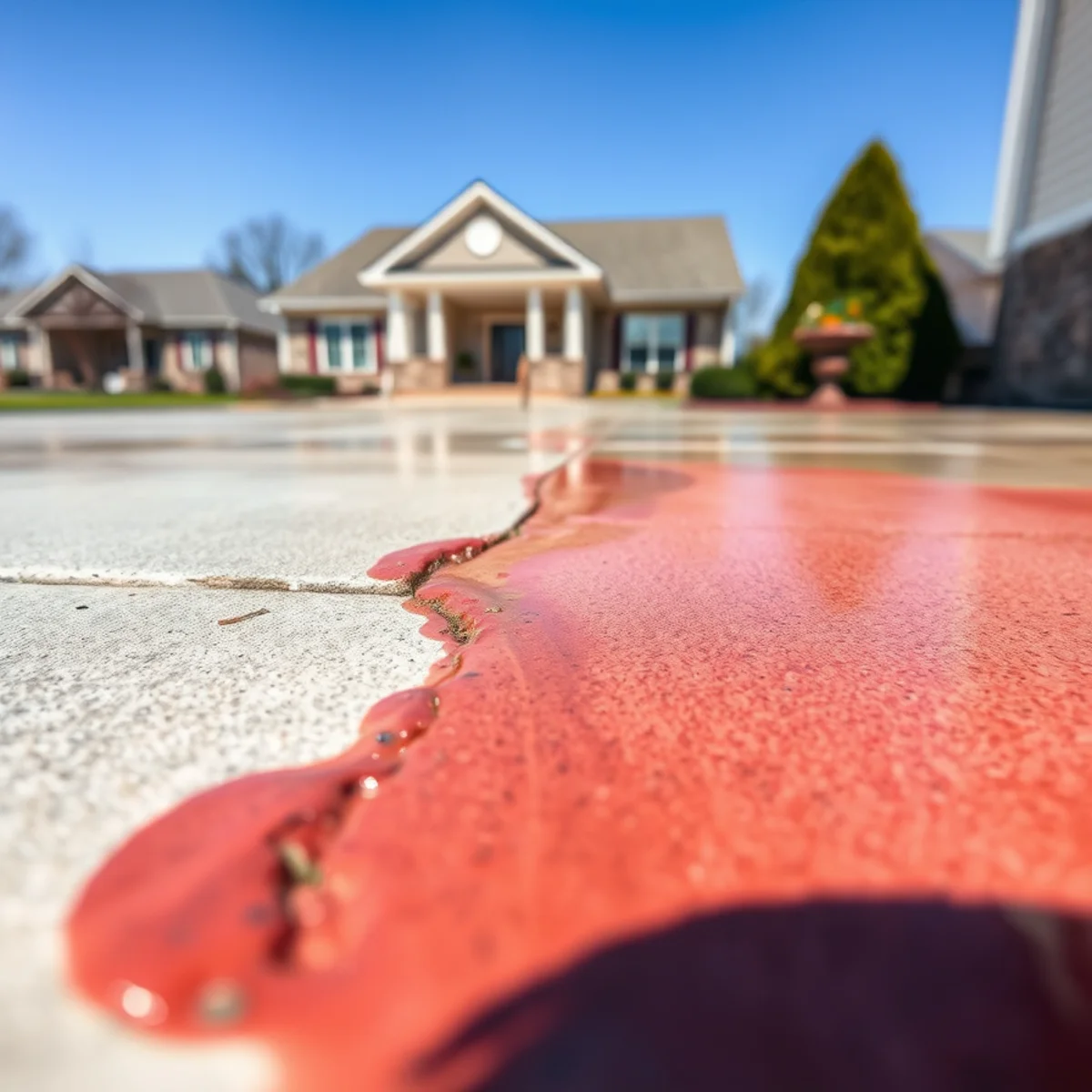
You walk out to grab the mail after a good Lincoln County rain, and there it is: an orange-brown film creeping across your concrete driveway that wasn't there yesterday. Maybe it's a fan-shaped streak by the garage, maybe it's a rusty halo where a planter used to sit, maybe it's just an all-over tint that makes your gray concrete look dirty no matter how much you rinse. You're not imagining it, you didn't do anything wrong, and you're definitely not alone around here. Let's break down exactly what that orange is, why our corner of the Piedmont practically manufactures it, and what it actually takes to get rid of it for good.
Why Your Lincolnton Driveway Turns Orange After Rain (The Short Answer)
The orange stain on your driveway is iron oxide. That's the exact same compound as rust. Whether it came off the red clay in your yard, out of your well water, or from a bag of fertilizer, the color you're seeing is iron that has oxidized and settled into the surface of your concrete.
Around Lincolnton, three culprits cause almost every orange driveway stain we see, and they rank roughly in this order:
- Piedmont red clay runoff — by far the most common, especially on newer lots and graded yards
- Iron-rich well or irrigation water — very common since so many Lincoln County homes are on private wells
- Fertilizer, Ironite, or rusting metal — sharp, spotty stains with a clear source
It shows up after rain because water is the delivery truck. Rain mobilizes iron-bearing clay particles, carries them across your hardscape, and drives them down into the porous surface of the concrete. As that water dries and the iron meets air, it oxidizes and locks in that orange color.
Here's the part most homeowners need to hear up front: this is treatable, but it tends to come back if you only clean the stain and ignore the source. The orange is a symptom. Real success means removing the iron and shutting off the supply.
Piedmont Red Clay: Why Lincolnton's Soil Stains Everything Orange
If you've spent any time in Lincoln County, you already know our dirt has a personality. That red-orange ground is Cecil-series soil — North Carolina's official state soil — and it covers a huge chunk of the Piedmont. It eroded over millions of years from the ancient highlands to our east and weathered into a deep, iron-rich clay that sits under most of our yards.
What gives Cecil clay its color is hematite, a form of iron oxide that coats the tiny clay particles (mostly kaolinite and mica). The iron is the pigment. So when red clay touches your concrete, it's not "dirty water" you can hose off — it's mineral pigment looking for somewhere to soak in.
How clay ends up on your concrete
- Rain washes loose clay off lawns, slopes, flower beds, and any bare soil
- That runoff sheets across driveways, walkways, and patios on its way downhill
- The clay slurry settles into the concrete's pores and the iron oxidizes in place
This is why new-construction homes and freshly graded lots in Lincolnton are the worst offenders. When a lot gets scraped for building, all that protective grass and topsoil is gone, leaving raw red subsoil exposed right next to a brand-new driveway. Every rain for the first year or two carries clay straight onto the concrete.
And here's the frustrating chemistry: iron oxide is not water-soluble and it's not detergent-soluble. You can rinse, scrub with soap, and blast it with a hose all day, and the color won't budge, because plain water and detergent simply don't break the bond iron has with the concrete. That's not a failure on your part. It's the wrong tool for the chemistry.
Iron in Well Water and Irrigation: The Hidden Orange-Stain Source
A lot of Lincoln County homes run on private wells, and well water around here often carries dissolved iron. The staining threshold is low — anything above about 0.3 parts per million is enough to leave orange marks — and plenty of local wells run well past that.
The sneaky part is that this iron is invisible in the water. It comes up as ferrous iron, which is dissolved and clear. The moment that sprinkler water hits the air and lands on your concrete, it oxidizes into ferric iron — visible rust. So the water looks perfectly clean coming out of the head, then stains the driveway as it dries.
How to spot irrigation staining
- Look for fan-shaped or arc-shaped stains that mirror your sprinkler spray pattern
- Stains are usually heaviest at the edge of the lawn nearest the driveway or walkway
- The pattern repeats in the same spots every watering season
There's a reason this catches people off guard even when they have water treatment. Irrigation lines almost always tap in before the home's water softener or iron filter, so the lawn system is pumping raw, untreated well water onto your hardscape while the water inside the house is clean. The driveway never gets the benefit of your filtration.
One more wrinkle: iron bacteria. These naturally occurring organisms feed on iron in well water and leave behind a slimy, orange-brown buildup. If your stain feels slick or gelatinous rather than dry and powdery, iron bacteria may be part of the picture.
Fertilizer, Ironite, and Rust: The Other Orange Culprits
The third source is the one homeowners create by accident. Many lawn fertilizers — and Ironite in particular — are loaded with iron to green up your grass. When those granules land on concrete instead of soil and then get watered in, they rust almost instantly and leave bright orange specks.
It happens more than you'd think because broadcast spreaders fling granules surprisingly far — easily up to around 11 feet — so even careful spreading near the driveway edge throws product onto the pavement. Then your sprinklers or the next rain dissolve it and rust it right into the surface.
Plain old rusting metal does the same thing. Patio furniture feet, a forgotten bike, rebar, a metal planter, or a damp bag of fertilizer left sitting out will all leave rust rings on concrete.
How to tell fertilizer and rust apart from red clay
- Fertilizer and metal stains are sharp and spotty — specks, granule patterns, or clean rings with defined edges
- Red clay runoff is diffuse and broad — a wash of color that follows the path water took across the slab
- Irrigation iron shows that telltale arc or fan shape matching your sprinkler heads
Easy prevention
- Sweep or blow stray granules off pavement before you water
- Keep the spreader hopper closed when crossing the driveway
- Don't store metal items or fertilizer bags directly on concrete
Why the Orange Stain Keeps Coming Back
This is the question that drives people crazy: they clean it, it looks great, and a few weeks later the orange is back. The answer is in the concrete itself.
Concrete is porous — it acts like a hard sponge. Iron-rich water and clay slurry don't just sit on top; they wick down into the pores through capillary action, below the surface where a hose or a scrub brush can't reach. You can clean the top and leave a reservoir of iron sitting just underneath, ready to bleed back up.
A few things keep the cycle going:
- Pressure washing alone can make it worse. Blasting iron-rich clay with high pressure can actually drive the particles deeper into the pores instead of lifting them out.
- The source is still active. If the clay slope, the well water, or the fertilizer habit hasn't changed, every rain or watering cycle reloads the stain.
- Bare, unsealed concrete keeps drinking it in. With nothing blocking the pores, your slab re-absorbs iron over and over.
- The high pH of cured concrete helps hold the iron oxide in place chemically, so it clings rather than rinsing free.
In short, the stain returns because cleaning the surface never addressed the iron underneath or the supply still feeding it.
DIY Mistakes That Make Orange Stains Worse
Before you reach for whatever's under the sink, know that the most popular DIY move is also the worst one.
Chlorine bleach is the number-one mistake. People assume bleach cleans everything, but on iron stains it backfires. Bleach is an oxidizer, and rust is already oxidized — adding more oxidizer can turn the stain a brighter orange. On top of that, bleach only whitens the pigment sitting on the very surface while the iron soaked into the pores stays put, so the stain just reappears once that surface layer wears off. It feels like progress and isn't.
A few other well-meaning mistakes:
- Repeated vinegar or muriatic (hydrochloric) acid can etch and weaken the cement paste, leaving a rough, chalky, more stain-prone surface than you started with
- Wire-brushing dry clay grinds the iron particles deeper into the pores instead of removing them
- Skipping the rinse-down of plants and surrounding surfaces lets harsh chemicals damage your landscaping
When DIY actually works (and when it doesn't)
- Worth a try: a fresh, light, small stain — a little lemon juice or diluted vinegar with a soft scrub can lift it before it sets
- Call a pro: deep stains, recurring stains, large areas, or anything tied to red clay, well water, or new construction — those need iron-specific chemistry, not pantry remedies
How Pros Remove Orange Iron Stains (Oxalic Acid and F9 BARC)
Here's where the chemistry finally works in your favor. The pro approach starts by removing the loose physical clay, then applying an iron-specific acid that chemically breaks the iron-oxide bond and lifts it up and out of the pores.
The key difference from bleach is the direction of the reaction. Bleach is an oxidizer and fails on rust. The acids we use are reducing and chelating agents — they grab the iron, dissolve it, and release it from the concrete instead of just bleaching the color off the top.
The two workhorses
- Oxalic acid — the cost-effective standard for most iron and rust staining. It reacts directly with the iron oxide and rinses it away.
- F9 BARC — the heavy hitter for stubborn, deep, or new-construction red-clay staining. It locks onto the iron and reverses the orange without "eating" the concrete the way muriatic acid does, restoring that natural gray.
Just as important as the product is the technique. We use a controlled low-pressure rinse and soft-washing approach so we're letting the chemistry do the work, not jackhammering iron back into the pores with a pressure wand. Even, streak-free results come from proper dwell time and dilution — not brute force.
This really is a job worth handing off locally. Done right it involves correct dwell times, careful dilution, proper PPE, protecting your plants and managing runoff, and keeping the whole slab even so you don't trade an orange stain for a blotchy clean spot. That's exactly the kind of work we do across Lincolnton and Lincoln County, and the difference between a DIY guess and a measured pro process shows up the first time it rains afterward.
Preventing Orange Stains: Sealing and Source Control
Removing the stain is half the battle. Keeping it gone is the other half, and it comes down to two things: sealing the concrete and shutting off the source.
Seal the concrete
Once the slab is clean, the single best defense is a penetrating silane-siloxane sealer. Instead of sitting on top like paint, it soaks in and lines the pores so water — and the iron riding in it — can't penetrate and stain.
Penetrating sealers beat film-forming sealers on a driveway for real-world reasons:
- They're breathable, so they won't trap moisture and turn cloudy
- They won't peel or flake the way a surface film does under tires and sun
- They don't get slippery when wet, which matters on a walkway
Timing matters: the concrete needs to be fully clean and completely dry — usually 2 to 3 days after the wash — before sealing, or you'll trap moisture and weaken the bond.
Control the source
- Red clay: regrade or redirect runoff so muddy water isn't sheeting across your driveway. Re-establish grass or mulch on bare slopes, especially on new-construction lots
- Well and irrigation iron: treat it at the source with iron filtration or polyphosphate injection on the irrigation line, and adjust sprinkler heads so they're not spraying directly onto concrete
- Fertilizer: keep granules and the spreader off the pavement, and sweep up any strays before watering
Maintenance for our clay-heavy environment
In a place like Lincoln County, where red clay and humidity never quit, the smart play is a maintenance rhythm: a periodic professional cleaning and re-sealing every few years keeps the iron from ever getting a foothold again. It's a lot cheaper and easier than fighting a deep, set-in stain.
---
That orange film isn't permanent, and it isn't a mystery — it's iron, it's coming from your clay, your well water, or your fertilizer, and it responds to the right chemistry and a good sealer. If your Lincolnton driveway keeps turning orange after every rain and you're tired of rinsing it for nothing, let a local crew that knows Piedmont clay handle it the right way. Give us a call at +1 (351) 242-0666 for a free estimate, and we'll get your concrete back to gray and keep it that way.
Written by the Hydro Jet PW Crew
Led by Caleb, a local Lincoln County firefighter who started Hydro Jet in 2015. We soft wash, protect your property, and treat your home like our own.
Frequently Asked Questions
It's iron oxide. Lincoln County sits on Piedmont red clay that's loaded with iron, and rain carries that iron-rich sediment across your concrete. The iron soaks into the pores of the slab and oxidizes, just like rust on a nail, leaving an orange stain that a hose and brush can't remove. Homes on well water often get a second dose of iron through their sprinklers.
Not really, and it can make things worse. High-pressure blasting doesn't break the chemical bond between the iron and the concrete, so the orange usually comes back. Worse, blasting opens up the concrete's pores, letting the next round of iron soak in deeper. Rust has to be broken down with a chelating treatment first, then cleaned with a rotary surface cleaner for an even finish.
Cut off the iron at the source. Aim sprinklers off the concrete so well water stays on the grass, redirect runoff from any clay beds or slopes uphill, and rinse mud and spills quickly. For longer-lasting protection, ask about a penetrating concrete sealer after a proper cleaning. The sealer fills the pores so iron-laden water can't soak in and bond as easily.
Got a stain you can't beat?
Let a local crew handle it. Free estimates, fast scheduling.
Call +1 (351) 242-0666