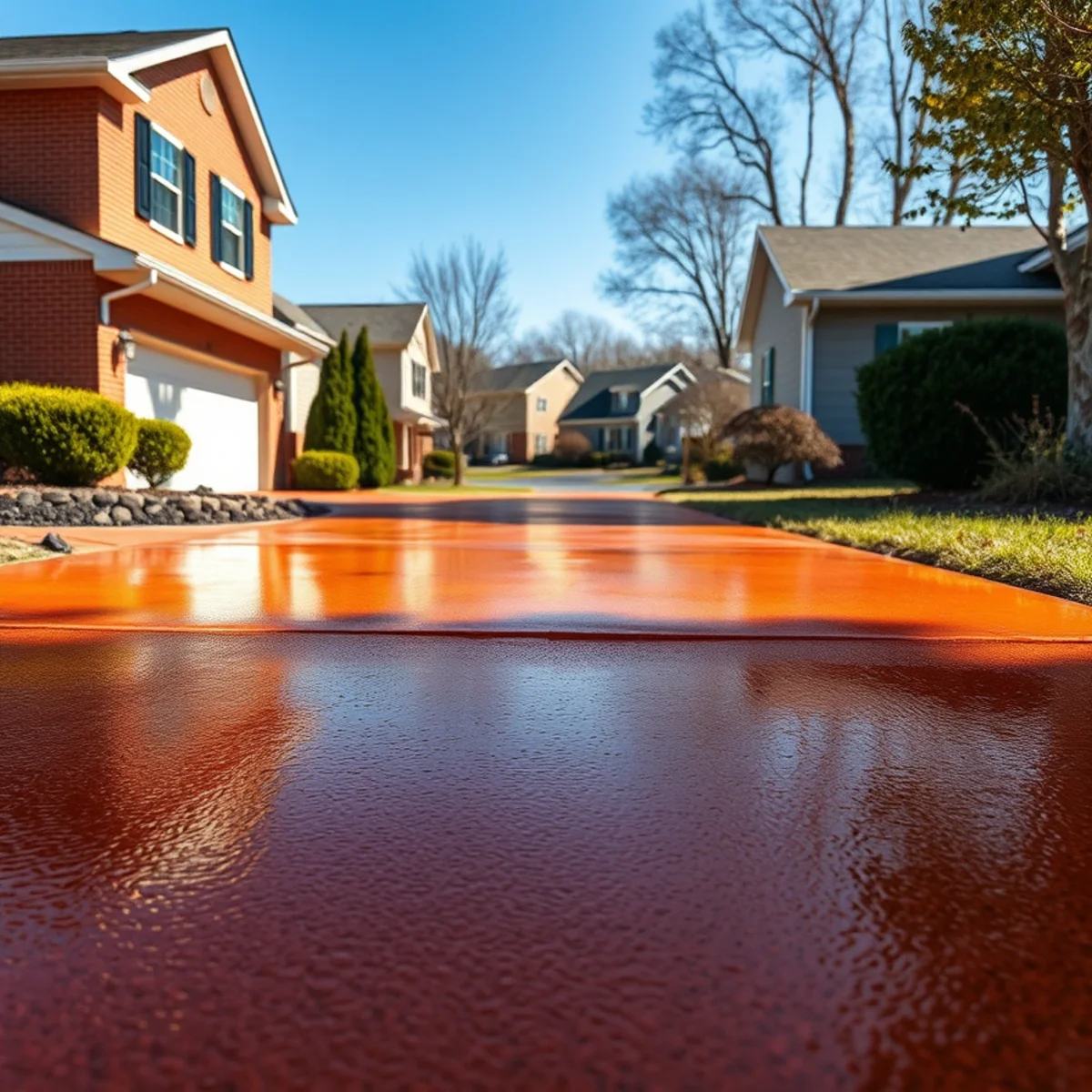
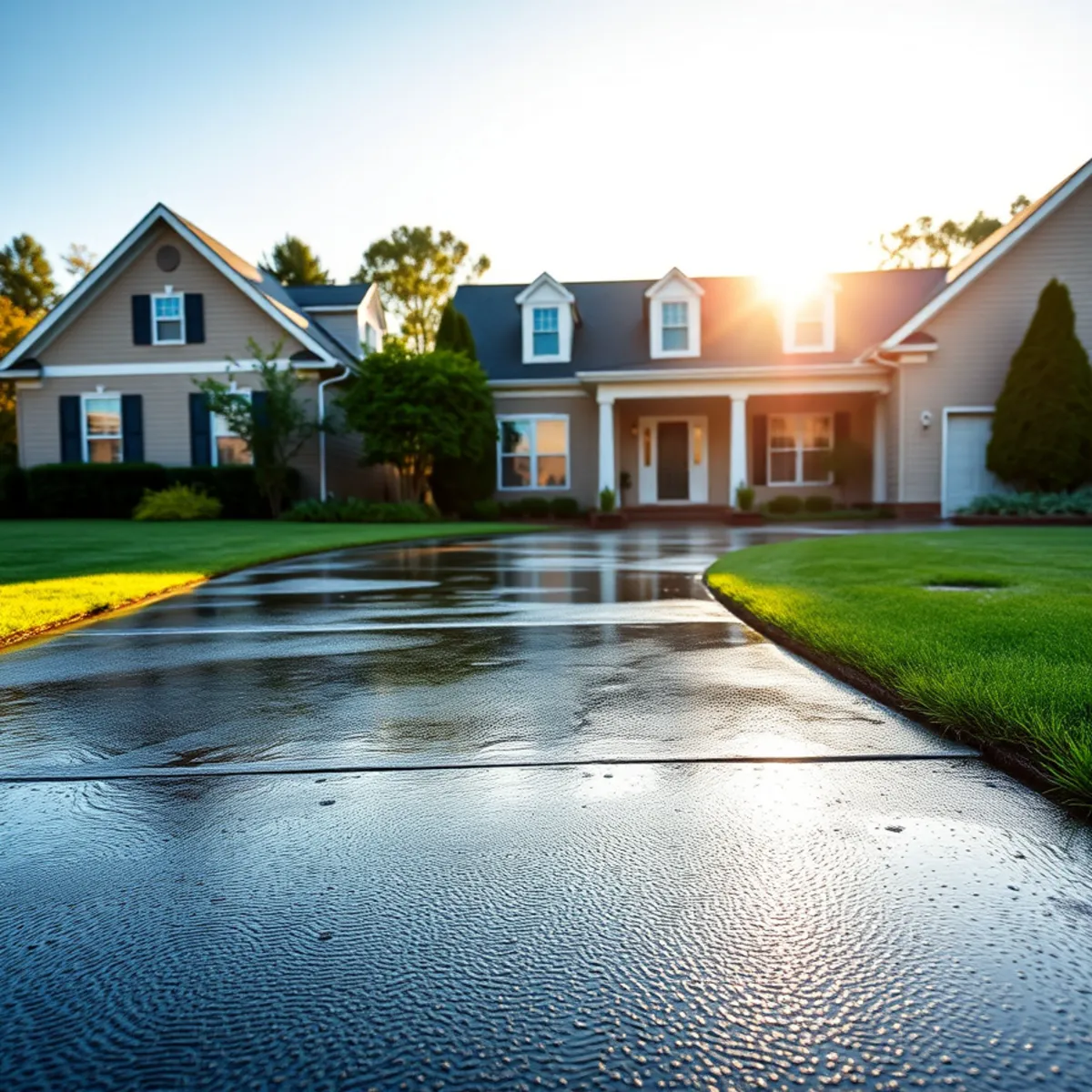
Your concrete tells on you. Red clay run-off bleeding across the driveway, black streaks creeping down the shaded side of the patio, a chalky white film on the pool deck that no amount of scrubbing seems to fix. Here in Lincoln County, our humidity, tree cover, and iron-rich Piedmont soil age concrete fast, and a garden hose just pushes the dirt around. We clean it right, down to the surface, so your concrete looks the way it did the day it was poured.
Professional Concrete Cleaning in Lincolnton, NC
Hydro Jet PW is a local, owner-operated crew handling concrete cleaning for patios, sidewalks, walkways, porches, pool decks, and driveways across Lincolnton and Lincoln County. We're licensed and insured with dedicated pressure-washing liability coverage, every estimate is free, and we've been washing homes around here since 2015. That matters more than it sounds, because cleaning concrete in the Piedmont isn't the same job it is somewhere dry. Our humidity, shade from oaks and pines, and that famous red clay mean your concrete grows algae and picks up stains a lot faster than the brochures admit.
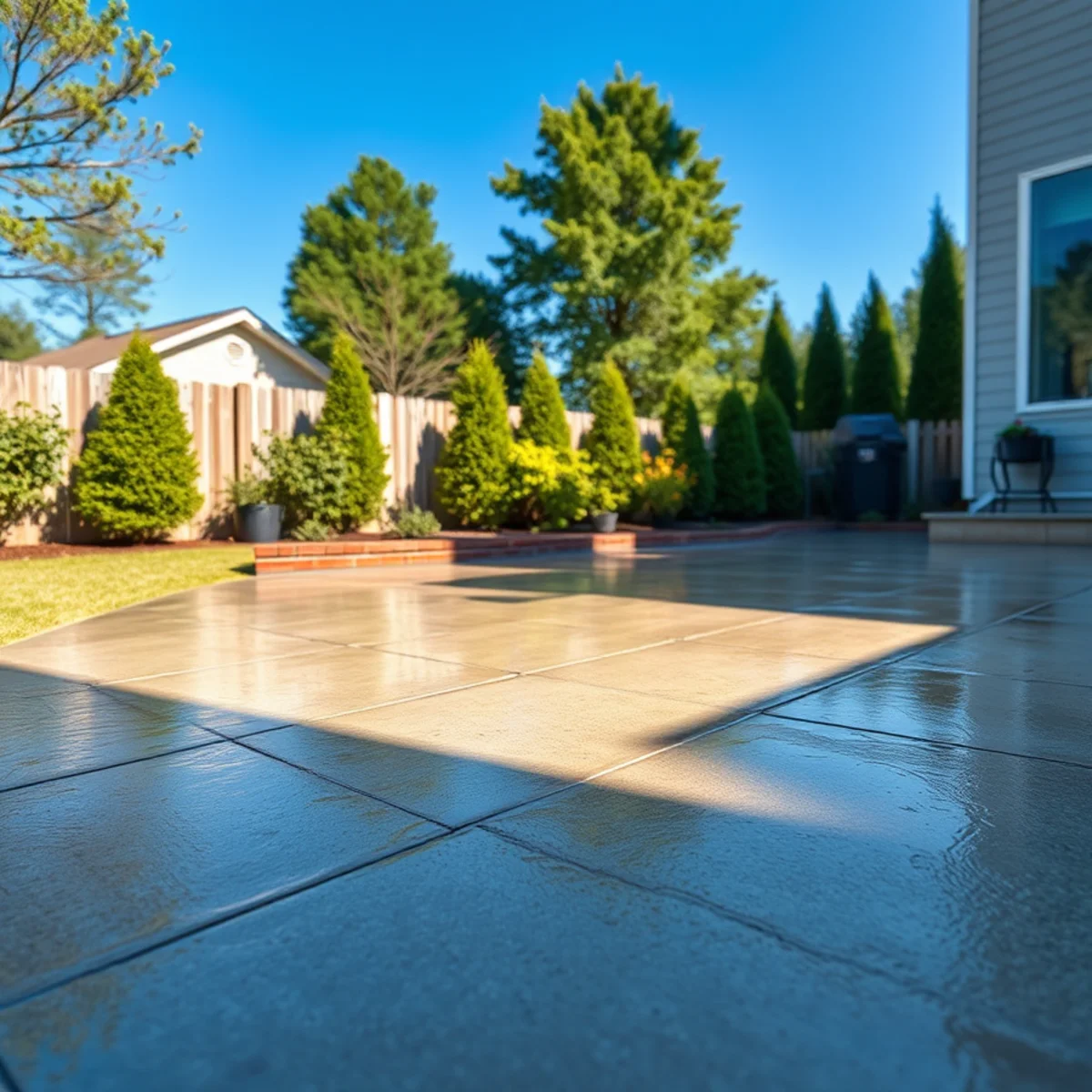
Here's what you can expect from us: a streak-free, even clean using a commercial rotary surface cleaner, not just a guy waving a wand around. A bare pressure wand leaves zebra stripes and gouges. A flat-surface cleaner spins the water in a sealed circle so the whole slab comes out one uniform tone, edge to edge. That's the difference between concrete that looks washed and concrete that looks new.
The Stains and Growth We Actually Remove
Most companies lump everything together as "mold and mildew." That's lazy, and it's why some cleanings don't last. Different stains have different chemistry, and the fix has to match the problem.
Organic growth: algae, mold, mildew, moss, and lichen
The green and black film on north-facing patios and shaded sidewalks is living growth feeding on moisture. Those ugly dark roof-style streaks are gloeocapsa magma, a cyanobacteria, and the black spots in your sidewalk joints are black algae digging in deep. Pressure alone knocks the top layer off, but it grows right back because the roots are still there. We treat it with a sodium hypochlorite soft-wash detergent that kills the algae, mold, mildew, moss, and lichen at the root. That's why our cleans hold up through a Lincoln County summer instead of greening over by August.
Red clay and iron-oxide staining
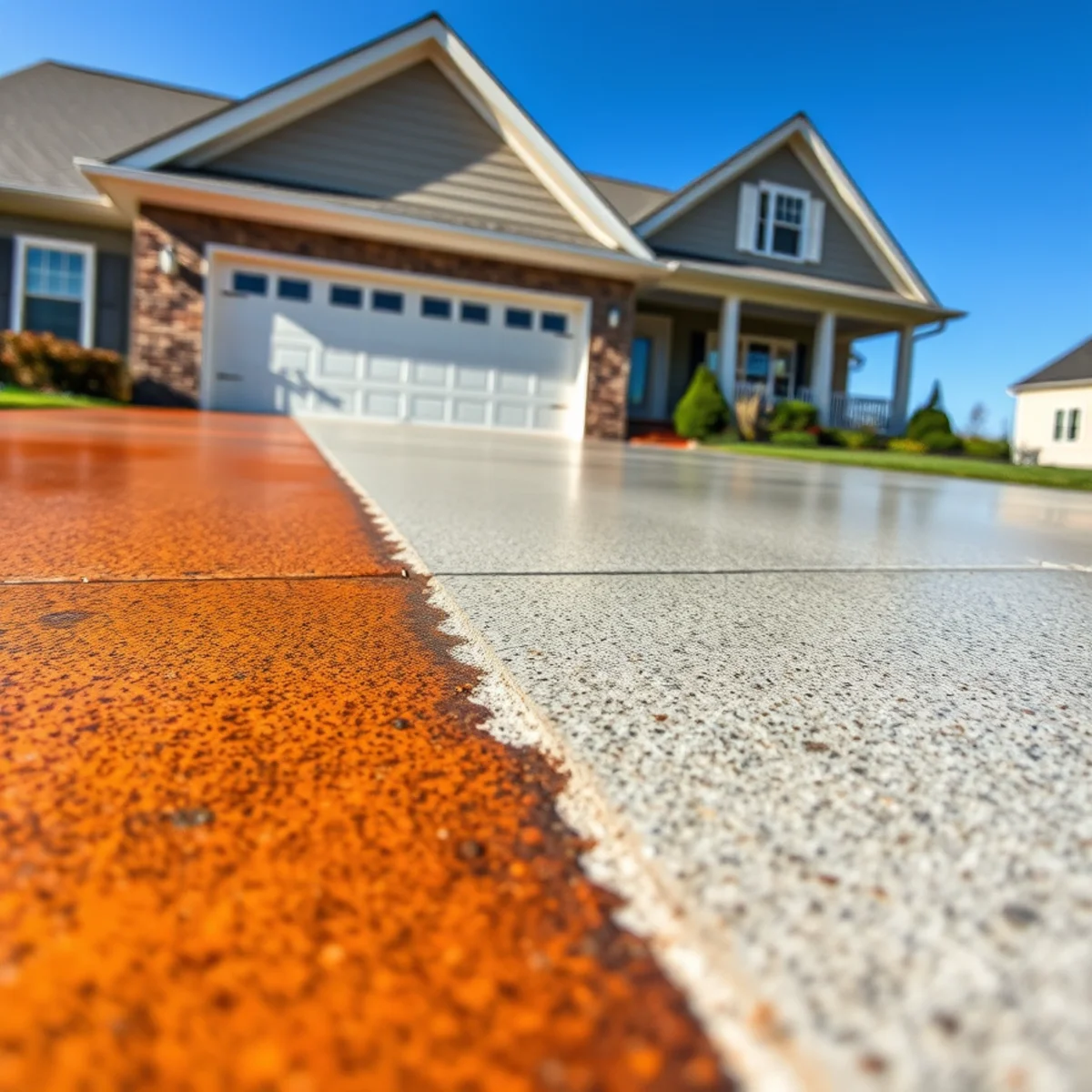
This one's ours, special to the Piedmont. Our red clay is loaded with iron oxide, and when it washes across concrete it chemically bonds to the surface. Plain rinsing barely fades it. Rust stains behave the same way and come from fertilizer overspray, metal patio furniture, rusting rebar, and the well-water irrigation a lot of folks out in Vale, Crouse, and Iron Station run on. Iron and manganese in that well water leave orange streaks wherever the sprinklers hit. Rust and clay are mineral stains, so bleach and a surface cleaner won't touch them. They need a targeted oxalic or acid treatment to break the iron bond and lift the color out.
Efflorescence, oil, grease, and tannins
That white chalky haze on a patio or pool deck is efflorescence, mineral salts (lime and calcium) wicking up through the concrete and crystallizing on top. Scrubbing fails because you're not removing dirt, you're dealing with the slab's own minerals, and it takes the right mild acid to dissolve and rinse it away. Oil, grease, and tire marks on the driveway are petroleum, so they get a degreaser and hot water to pull them out of the pores. And those brown blotches under your oaks and pines? Leaf tannin stains from wet leaves sitting too long, common on every shaded slab in this county. We identify which of these you've got before we ever pull a trigger, because the treatment is completely different for each.
Pressure Washing vs. Soft Washing: Which Is Safe for Your Concrete?
This is the question that keeps homeowners up at night, and for good reason. Too much PSI absolutely can wreck concrete. Crank a turbo nozzle on an older or decorative slab and you get etching (rough swirl marks burned into the surface), spalling (the top layer flaking and pitting), and streaking that never evens out. Once concrete is etched, it's etched for good.
So we match the method to the surface. Solid, healthy broom-finish concrete can take a stronger wash through a surface cleaner that distributes the pressure evenly. But stamped, colored, or older concrete, pavers, and brick get a gentler touch leaning on chemistry instead of brute force, because the color coat and the joints are easy to blow out. The smart play almost everywhere is soft washing: low pressure plus the right detergent that kills the growth at the root for a clean that lasts far longer than blasting alone. You don't fight a living organism with PSI. You kill it with the proper solution and let low-pressure water do the rinsing. We pick the approach surface by surface so nothing on your property gets damaged, and we'll tell you straight which one yours needs.
Pool Decks, Stamped Concrete, and Pavers
Pool decks are their own animal, and they're the surface most companies are scared to quote because the damage risk is real. Broom-finish, stamped, and aggregate pool decks collect a nasty mix: efflorescence near the waterline, chlorine and sunscreen residue, mildew, and that slick algae film that turns a deck into a slip hazard the second it's wet. Out around Lake Norman and the Denver lakefront, the constant humidity makes all of it worse. We clean these on low pressure with deck-safe chemistry so we lift the grime and growth without etching the texture or fading the color, and we protect your landscaping and pool water on every job. Same careful approach goes for pavers, brick, and stamped or colored concrete anywhere on your property, where blasting the joint sand out or stripping the color is a one-way mistake.
Should You Seal Your Concrete After Cleaning?
Sealing isn't required, but it's one of the smartest add-ons in our climate. A clean, sealed slab blocks moisture from soaking in, resists oil and rust stains, and slows down how fast algae comes back, which is no small thing with our humidity and shade. The catch is timing: concrete has to be bone-dry first. We let it cure 24 to 48 hours after cleaning, and honestly a bit longer in deep shade or a damp stretch, because sealing over trapped moisture causes a cloudy, blotchy finish.
There are two main routes. A silane-siloxane penetrating sealer soaks in, repels water from inside the pores, and leaves a natural matte look that won't get slippery, which is ideal for driveways and pool decks. An acrylic sealer sits on top and gives that wet, glossy "enhanced" look that makes colored and stamped concrete pop. Either way, plan to reseal every two to three years in this climate, and apply it in thin, even coats out of direct midday sun so it doesn't flash-dry and streak. We're glad to handle the seal once the slab is dry, or just clean it and point you the right way if you want to DIY.
How Often Should You Clean Concrete in Lincoln County?
More often than you'd think. Between our pollen season, the summer humidity that feeds algae, leaf tannins every fall, and the freeze-thaw cycles that work grime deeper into aging concrete, most driveways and patios here want a cleaning every one to two years to stay ahead of the staining. Shaded north-facing slabs and anything under heavy tree cover trend toward the yearly end. Keep up with it and the stains never get a foothold, which makes each cleaning faster, cheaper, and easier on the concrete than waiting until it's a green-and-black mess.
Why Lincoln County Neighbors Call Us
We're not a franchise reading off a script. We're a local crew that knows exactly what red clay does to a driveway off Highway 321, why the patio behind a tree-shaded home off the Lincoln County school routes greens up first, and how well-water irrigation rusts a walkway out in the country. We're licensed and insured, we back our work, and we carry a 5.0-star rating from 78 Google reviews from folks right here at home. We treat your property like it's our neighbor's, because around here it usually is.
We clean concrete across Lincolnton, Denver, Maiden, Cherryville, Vale, Iron Station, Crouse, Newton, and Conover. Whether it's one stained patio or a driveway, walkways, and house all at once, we'll size it up honestly and give you a clear price before any work starts. Bundle the driveway with the house wash and the walkways and we'll work the package in your favor.
Ready to see your concrete clean again? Call Caleb and the crew at +1 (351) 242-0666 for a free, no-pressure estimate, or request your quote online. We'll tell you exactly what's staining your slab, what it'll cost, and how long the results will hold, no corporate runaround.

 Concrete & Driveway Cleaning