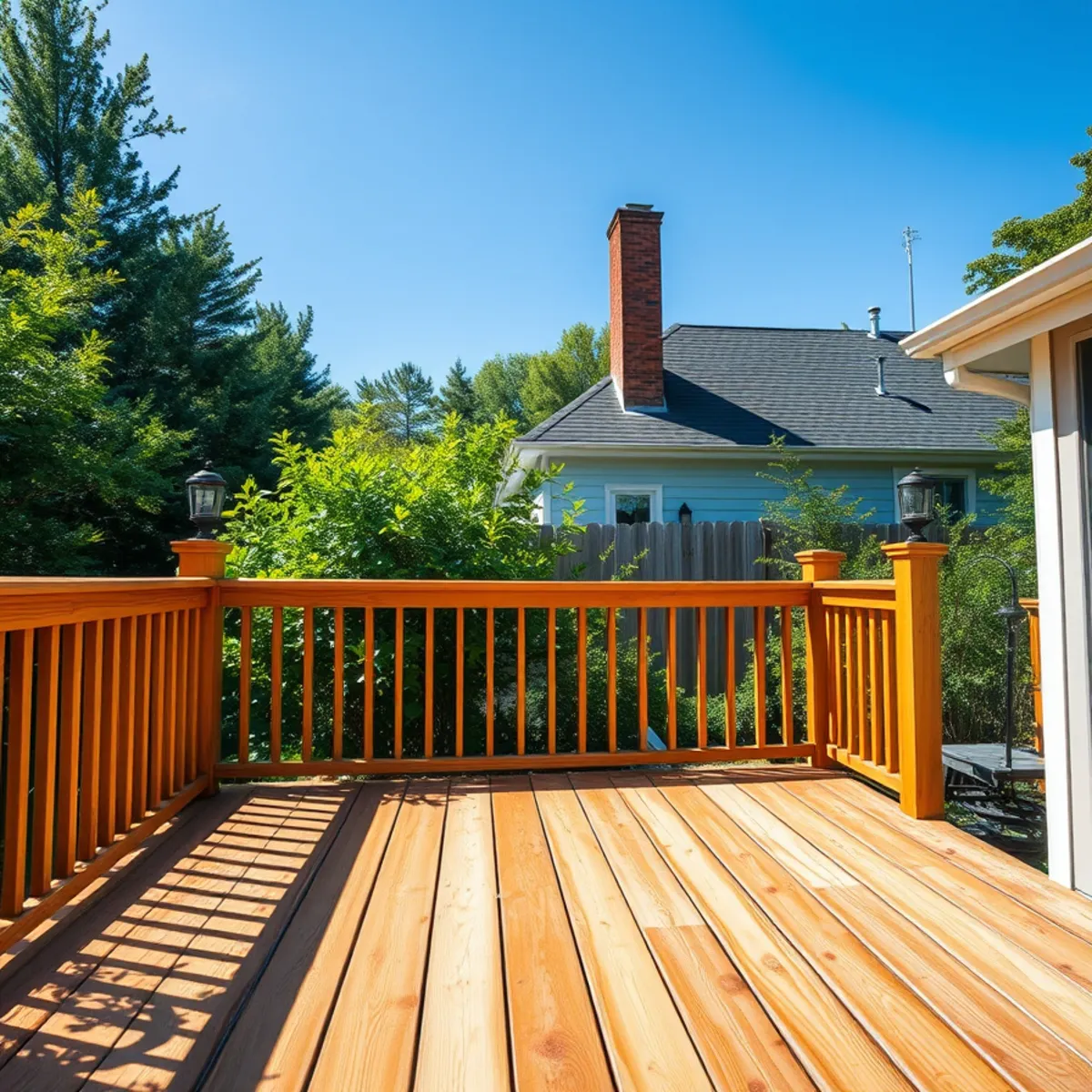
Your deck has gone gray, the boards feel slick after a Lincoln County rain, and there's a green-black film creeping along the shaded north side. Left alone, that algae keeps spreading, the wood keeps oxidizing, and what should be the best seat in the yard turns into a slip hazard you don't trust your kids or your guests on. We clean it the right way — method matched to your deck, low pressure first — so the wood comes back even and ready, and a composite deck looks new without getting wrecked.
Professional Deck Cleaning in Lincolnton, NC
Hydro Jet PW washes decks for homeowners across Lincolnton (28092 and 28093), plus Denver, Iron Station, Crouse, Vale, Stanley, and the Lake Norman side of the county. We handle the problems Piedmont weather hands you: gray UV oxidation, green and black algae, mildew, ground-in pollen, and the slick film that makes old boards dangerous. None of that gets fixed with a one-size-fits-all blast.
The big thing that sets a real deck wash apart is this — the method has to match the surface. A weathered pine deck and a Trex deck are not the same material and they do not get cleaned the same way. We lead with soft washing: low pressure plus the right cleaner does the work, not brute force. You get the cleaning power from chemistry and dwell time, while the pressure stays gentle enough to protect the wood. We're licensed and insured with dedicated pressure-washing liability, we'll show you before-and-afters, and if you want it, we can clean and then stain or seal in the same dry-weather window.
Wood vs. Composite: Why the Cleaning Method Has to Change
Pressure-treated southern yellow pine, cedar, and redwood are soft woods. Push too much PSI into them and the surface furrs up — the grain raises, the fibers fuzz, and you're left with splinters and stripes that no amount of stain hides. Soft wood needs a cleaner and a brightener, gentle pressure, and a crew that moves with the grain.
Composite and PVC — Trex, TimberTech, and the rest — are a different animal. They don't oxidize gray like wood does. Their problems are surface mold growing in the embossed grain texture, white hard-water spotting, and pollen ground into the cap. They need a degreasing, oxygenated wash, a soft brush, and a rinse — that's it. High pressure can pit the protective cap and, on early-generation composite boards, pressure washing can void the manufacturer's warranty outright. That's a real risk a lot of local crews never warn you about. Many composite makers cap the PSI and require a fan tip for exactly this reason.
Knowing What You've Got
If you're not sure whether your deck is wood or composite, we'll tell you on the free estimate, and we'll factor in the finish. Bare, stained, sealed, and painted boards all tolerate cleaning differently — a sealed deck cleans up fast, while a tired painted deck may need a gentler touch so we don't peel what's left.
Removing Gray Oxidation and Bringing the Color Back
That gray layer on an old wood deck is sun damage — UV light breaks down the lignin and cellulose right at the surface. It's not just ugly. That dead, oxidized layer blocks new stain from bonding, which is why a deck that gets stained without a proper cleaning starts failing within a season.
We pull it off in two moves. First, we clean with a sodium percarbonate (oxygenated) cleaner that lifts dirt and gray and kills organic growth without the harshness of bleach. Then we follow with an oxalic-acid wood brightener. That step neutralizes the pH the cleaner leaves behind, reopens the wood's pores so stain can actually soak in, and knocks back the dark tannin bleed and black streaking that show up around fasteners and knots. The result is an even, near-original tone. On a badly furred or heavily weathered board, a light pass with 80-grit sanding fills the gap chemistry can't — but most decks come back with the clean-then-brighten sequence alone.
Killing Mildew, Mold, Algae, and Green-Black Stains
Lincoln County humidity and shade are an algae factory. North-facing boards, anything under a tree canopy, and decks near Lake Norman or the Catawba stay damp longest and grow the fastest — green algae, black mildew, and the stubborn black gloeocapsa and lichen that look almost painted on. Lakeside and dock-adjacent boards take it worst because they never really dry out.
This isn't only cosmetic. That biological film is genuinely slick, and a wet, algae-coated deck is a real slip-and-fall hazard around the grill or the hot tub. We treat it with oxygenated or controlled-strength sodium-hypochlorite blends and let the cleaner dwell so it kills the growth at the root instead of just bleaching the color out of the top. Then we hit the spots that hide it — railings, balusters, fascia, and lattice underneath, where algae sits and reseeds the whole deck if it's left alone.
Why Straight Bleach Is a Bad DIY Move
A jug of household bleach feels like the cheap fix, and it's tempting. Skip it. Straight chlorine bleach degrades the lignin that holds wood fibers together — it can leave the surface dry and fuzzy — it kills your foundation plantings and lawn on the runoff, and it only takes the color off the top so the algae regrows fast. The pro blends we use clean deeper, rinse safer for your landscaping, and actually buy you time before the green comes back.
Safe Pressure: PSI, Nozzles, and Technique
On wood, the target is roughly 500 to 1,500 PSI through a 25- or 40-degree fan tip — or a surface cleaner on flats — held 12 to 18 inches off the board and moving the whole time. We work with the grain in overlapping passes so there are no stripes, no gouges, no raised fuzz.
What we never put on a deck: a 0-degree red tip, a turbo or rotary tip, or any sandblaster attachment. Those carve lines into soft wood in a heartbeat and are the number one reason DIY deck jobs end up looking worse than before. On composite, it's low pressure or a plain hose rinse — full stop — because the chemistry, not the pressure, is what cleans.
That's the whole point of how a pro rig works. We downstream-inject the cleaner so it does the lifting and the killing, which lets the pressure stay low and safe. You get a deck that's genuinely clean without the damage that comes from trying to power your way through grime.
Cleaning as Prep for Stain and Seal
If you're planning to stain or seal, the cleaning isn't optional — it's the part that decides whether the finish lasts two years or two months. Stain laid over trapped dirt, pollen, and oxidation can't grip the wood, so it peels and flakes early. The clean-then-brighten sequence leaves the wood at a neutral pH with open pores, which is exactly the surface a penetrating stain needs to bond to.
Moisture is the other half. Freshly washed wood is full of water, and finish applied too soon gets trapped and fails. We let the deck dry 24 to 48 hours and check the moisture before anything goes on. From there we steer you toward a penetrating semi-transparent stain or a water-repellent sealer with UV and mildew inhibitors — the kind that fights off the exact problems our climate throws at it. Bundle the clean and seal and we handle the timing for you, lining the whole job up inside one stretch of dry weather.
How Often to Clean and Seal a Deck in Lincoln County
Our weather pushes maintenance intervals to the short end. The Piedmont runs around 45 inches of rain a year, humidity peaks near 76% in spring and again in December, and heavy spring pine pollen drops a yellow film that literally feeds mildew. Decks here grow dirty faster than decks in a drier part of the country.
As a rule of thumb: clean a wood deck once a year and reseal every one to three years depending on sun and traffic. Clean a composite deck gently twice a year — once in spring to clear the pollen, once in fall before the leaves pile up. The best windows are spring or early fall, when it's 50 to 85 degrees, humidity is lower, and there's a dry stretch ahead of the next rain. Watch for the signs you're overdue: graying boards, water that no longer beads, a slick algae film, or splinters starting to lift. For HOA neighborhoods and lake-area homes that gray and grow fast, we set up a recurring plan so it never gets to that point.
What Deck Cleaning Costs in Lincolnton
Most deck jobs land somewhere between a straightforward clean-only and a full clean-plus-seal, and the spread runs roughly $500 to $1,700 depending on size and condition. The drivers are square footage, how many levels and how high the deck sits, whether it's wood or composite, how bad the oxidation and mold are, and how much railing and baluster footage there is to detail by hand. Brightener, stain, and sealer add to the quote because they're real material and labor — and we'll tell you exactly what's included before we start.
You can rent a machine and buy chemicals yourself, and for a small deck that's a fair option. But factor in the rental, the right cleaner and brightener, a weekend of your time, and the risk of furring the wood or voiding a composite warranty — then weigh it against a crew that carries insurance and stands behind the work with a written 30-to-90-day re-clean guarantee. We measure the deck on-site, look at the wood and the growth, and give you an honest free quote with no surprises.
Ready to get the gray out and the slick film off before the next cookout? Call Hydro Jet PW at +1 (351) 242-0666 for a free, no-pressure estimate. We're local, we're licensed and insured, and we'll match the right wash to your deck so it comes back looking like yours again.

 Concrete & Driveway Cleaning