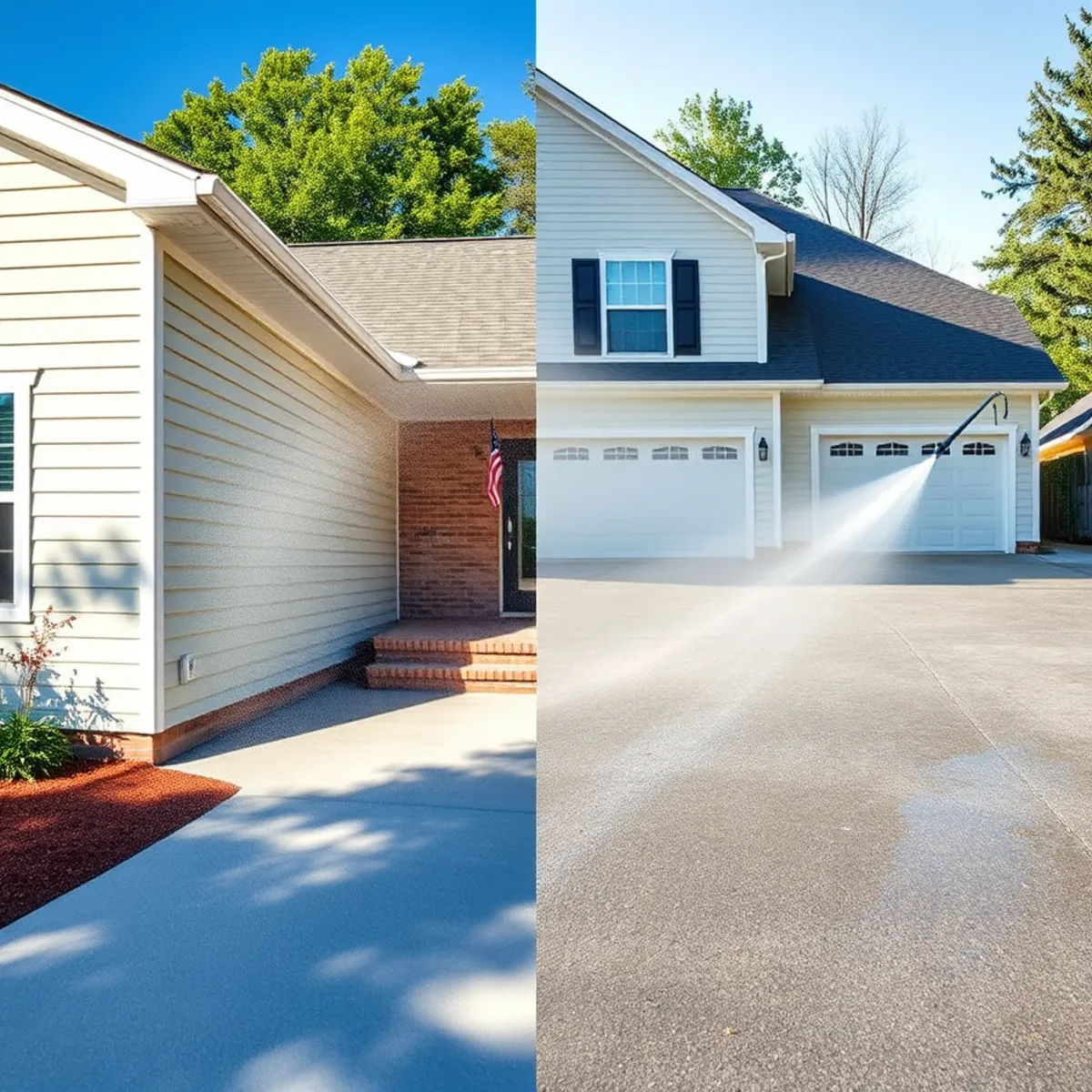
Your patio should be the best seat in the yard, not the spot nobody wants to walk on barefoot. But in Lincoln County, a paver or concrete patio goes from clean to slick and green fast. Humidity, shade, red-clay runoff, and a steady drop of pollen and leaves work on the surface all year, and once black algae and moss take hold the patio looks years older than it is. The good news: most of that comes off, and with the right method it stays off a lot longer. We clean paver, brick, natural stone, and concrete patios across Lincolnton the way each surface needs, then re-sand the joints and seal when it makes sense.
Professional Patio Cleaning in Lincolnton, NC (Pavers, Stone & Concrete)
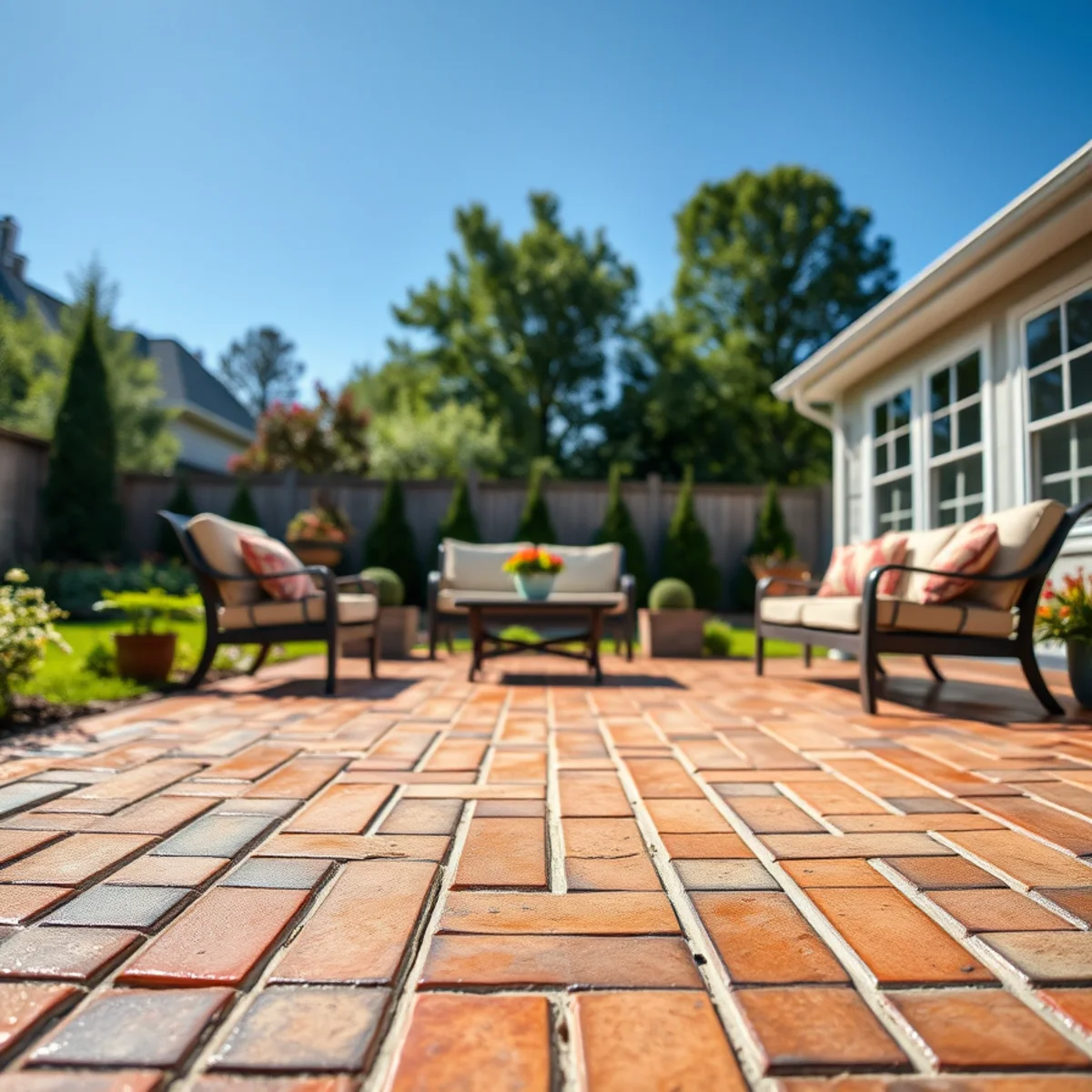
Hydro Jet PW cleans every kind of patio you'll find around here — interlocking concrete pavers, clay brick, natural flagstone and travertine, stamped concrete, and plain broom-finish slabs. Each one calls for a different touch, and that's the first thing a generic pressure-washing crew gets wrong. We match the method to the material instead of hitting everything with the same wand at the same pressure.
We're local, so we're cleaning patios in the same conditions you live in. Around Lincolnton, the combination of high humidity, heavy hardwood shade, spring pollen, and Piedmont red-clay runoff turns outdoor living space grimy fast. A patio that got pressure washed two summers ago is usually green and slick along the shaded edges again. Our job is to clean it down to the real surface, replace the joint sand the cleaning lifts out, and — if you want it to last — put a sealer on top so it shrugs off the next round of growth and stains.
We cover Lincolnton (28092), Denver, Iron Station, Crouse, Vale, Pumpkin Center, and the Lake Norman west shore, plus nearby Mooresville, Gastonia, Hickory, Belmont, Mount Holly, and Stanley. If you want a number before you book, we'll come look at the patio in person and give you a flat quote — call us at +1 (351) 242-0666 for a free on-site estimate.
Why Lincolnton Patios Get Dirty So Fast
It helps to know what you're actually fighting, because the cause changes how we clean.
Our humid Piedmont summers run thick — humidity climbs near 97% on a still July afternoon — and that damp air is exactly what black algae, moss, and mildew need to spread across a shaded slab. Add the mature oaks and maples a lot of Lincoln County yards have, and the north-facing side of a patio almost never fully dries out. Damp plus shade equals organic growth, season after season.
Then there's the tree debris. Spring dumps a heavy coat of yellow pollen on everything, and fall brings the leaf and acorn drop. Wet leaves left sitting on pavers leach tannins — the same brown stain a wet oak leaf leaves on a sidewalk — and that discoloration sinks in if it isn't cleaned off.
The last local culprit is the soil itself. Piedmont red clay is loaded with iron oxide, and when rain washes yard runoff across the low spots and edges of a patio, it tints the pavers orange-brown. On rural lots, well water with iron and manganese can leave similar staining around spigots and hose bibs. None of it rinses off with a garden hose, because it isn't just sitting on top — it's bonded in.
Freeze-thaw cycles and hard rain finish the job by washing the sand out of the joints. Once those joints open up, weeds and grass move in, ants follow, and individual pavers start to shift and rock. That's why a real patio cleaning has to deal with the joints, not just the faces of the stones.
Is Pressure Washing Safe for Pavers and Stone? (Why We Soft Wash)
This is the question most homeowners are really asking, and it's a fair one. Too much pressure on a patio does damage you can see for years. A high-PSI wand blasts the sand right out of the joints, etches and "stripes" the surface where the tip lingers, and on pavers it erodes the top layer until the rough aggregate underneath shows through. Once that protective surface is gone, the paver actually gets dirty faster.
So on pavers and stone we keep the pressure down — generally under about 2,000 PSI — and we run a flat surface cleaner instead of a bare wand. The surface cleaner spins two nozzles under a hood at an even height, which gives you one consistent clean across the whole field with no zebra stripes. Softer natural stone like flagstone and travertine, and older or flaking concrete, get gentler treatment still.
For the green and black growth, the real work is the detergent, not the pressure. We soft wash — apply a sodium hypochlorite (SH) cleaning mix that kills the algae, mold, and mildew at the root, let it dwell, then rinse at low pressure. Blasting only knocks the surface layer off; the roots are still there, so it grows back within weeks. Killing it chemically means it comes back slowly, and the patio stays clean far longer. Before any of it, we test a small spot to confirm how the surface reacts, and we protect your plants, furniture, and the adjacent siding, then flush the beds with water on the way out.
Stains and Problems We Actually Remove
Most thin local pages stop at "mold and mildew." A patio collects a lot more than that, and each stain needs its own treatment:
- Black and green algae, moss, and lichen — the most common Lincolnton complaint, handled with a soft-wash SH mix that kills it at the root.
- Leaf and tannin staining from oaks, maples, and acorns sitting wet on the surface.
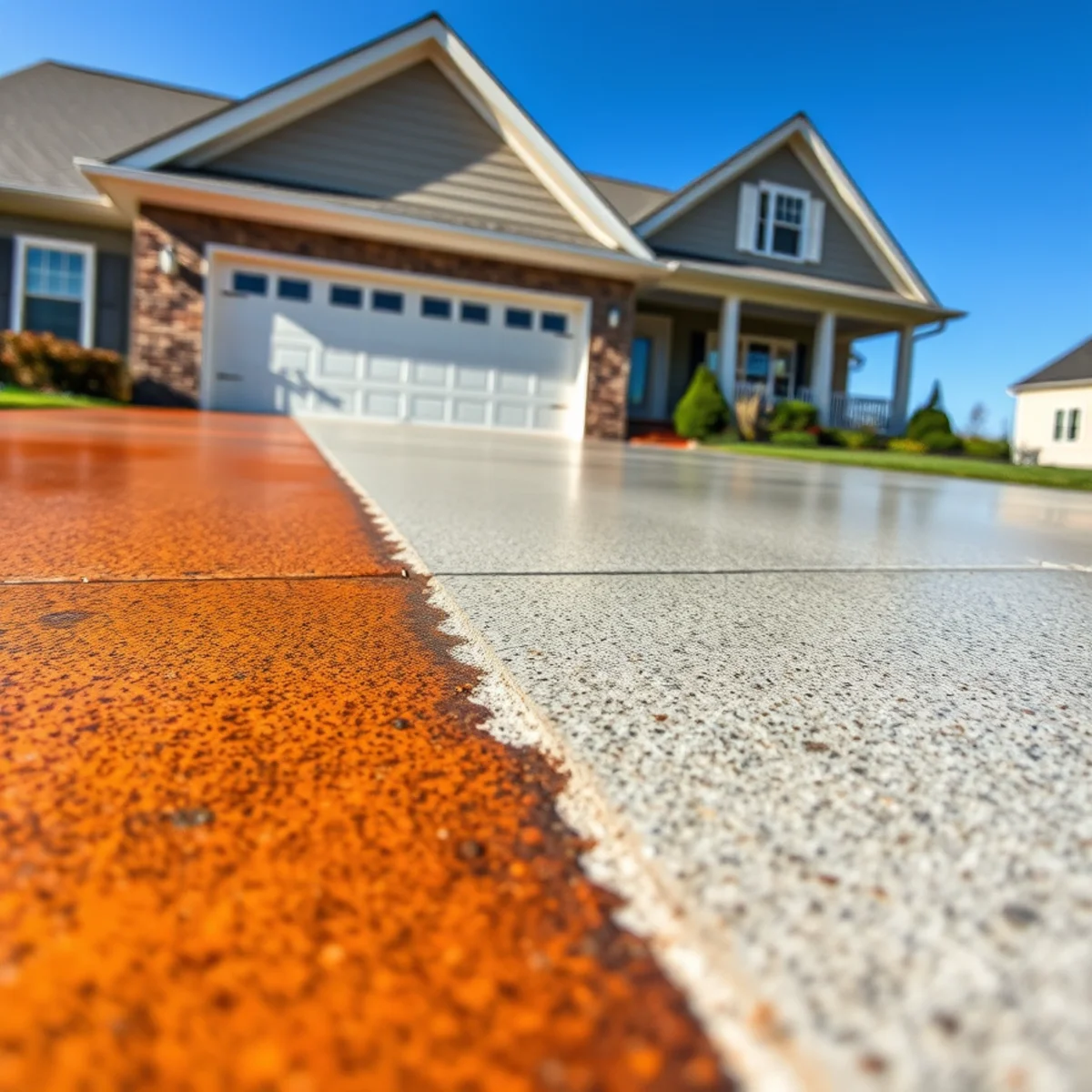
- Rust from metal furniture feet, rebar, and iron-rich fertilizer overspray — these need a dedicated rust remover, not chlorine, which can actually set rust.
- Grease and oil from grills, smokers, and fire pits, which we pull with a degreaser before cleaning.
- Efflorescence — that chalky white mineral haze that migrates up through concrete and pavers — plus the orange-brown red-clay and runoff discoloration along the edges.
Efflorescence is worth a note because it fools people. It's salt deposited from inside the paver, not dirt on top, so scrubbing does nothing. It gets a specific acidic treatment (a diluted muriatic or efflorescence cleaner used with proper PPE and a thorough rinse), and it's one more reason not to trap it under a sealer before it's dealt with.
Joint Sand, Weeds, and Re-Sanding
Here's the paver-specific piece almost no competitor explains. When we clean a paver patio, the wash lifts out whatever loose, weed-filled sand is left in the joints — and that's a good thing, because that old sand was doing nothing. The catch is that those joints can't be left empty. Open joints let pavers shift, invite weeds and ants right back, and let water undermine the base.
So after cleaning we re-sand. For most patios we recommend polymeric sand, which has a binder mixed in. You sweep it into the joints, mist it to activate, and it hardens into a firm, flexible joint that locks the pavers together, resists weeds, and holds up roughly 10 years — compared with about 2 years for ordinary joint sand that just washes out again. We sweep, compact, and mist-set the sand so the patio looks finished, not just clean.
Before any sealing, we look the joints over for open gaps, washout, and settling. If pavers have sunk or shifted badly, that's a base issue you want to know about, and sealing over it just locks in the problem.
Paver Sealing After Cleaning (Protection and Color)
Sealing is optional, but on a paver or stamped-concrete patio it earns its keep. A good sealer adds stain resistance, blocks UV fading, slows algae regrowth, and stabilizes the joint sand so it stops washing out. It also brings the color back — sun-faded pavers look richer, almost like they did the day they went down.
There are two main types, and which you want depends on the look you're after. Penetrating sealers soak in and protect from within while leaving the surface looking natural and matte. Film-forming sealers sit on top and give that darker "wet look" sheen a lot of people love on a pool deck or entertaining patio. We'll walk you through both on-site.
Timing matters. On a brand-new install, it's best to wait about a year before the first seal so the joint sand settles and any efflorescence has worked its way out — sealing too early traps that white haze under the film for good. After that, in our humid climate, plan to reseal roughly every 2 to 3 years, though some setups stretch to 3 to 5. The mistakes we fix for people are always the same: sealing a patio that's still dirty or still wet, sealing over efflorescence, or laying it on too thick so it clouds. We seal only a clean, dry, properly prepped patio.
How Much Does Patio Cleaning Cost in Lincolnton?
Most local pages dodge this, so here's a straight answer. Professional patio washing in our area typically runs about $0.25 to $0.50 per square foot, and most patio jobs land somewhere around $150 to $400. Heavy organic growth or grease that needs extra detergent and dwell time pushes toward the high end of that range.
Re-sanding and sealing are add-ons, since they're real material and labor on top of cleaning — sealing a patio often adds roughly $180 to $370 or more depending on size and the sealer you choose. What moves your number is straightforward: square footage, surface type, how stubborn the stains are, and how easy the patio is to access (a steep or fenced-in backyard slows the job down).
We don't quote a patio sight unseen, and we don't do surprise upcharges. We come look, measure, and give you one flat price for exactly what you want done.
Service Area: Lincolnton & Surrounding Lincoln County
We're based right here, so our response time is quick and you're dealing with a local crew, not an out-of-town outfit chasing Charlotte jobs. Our primary area is Lincolnton (28092), Denver, Iron Station, Crouse, Vale, and Pumpkin Center, and we regularly run out to Lake Norman waterfront homes, Mooresville, Gastonia, Hickory, Belmont, Mount Holly, and Stanley.
We see the local pattern clearly: downtown Lincolnton patios under big shade trees, lake-area outdoor living spaces and pool decks that need a refresh before the entertaining season, and HOA neighborhoods where curb appeal and a clean patio aren't optional. Hydro Jet PW is locally owned, licensed, and carries dedicated pressure-washing liability insurance, so your property is covered while we're on it. Fall and spring are the sweet spots to clean — after the leaf drop and before pollen season, or right after pollen and ahead of summer cookouts.
If your patio's gone green, the joints are full of weeds, or you just want it bright again before the next get-together, give us a call at +1 (351) 242-0666 for a free on-site estimate. We'll look it over, tell you straight what it needs, and put a flat price on it — no pressure, just a clean patio.

 Concrete & Driveway Cleaning