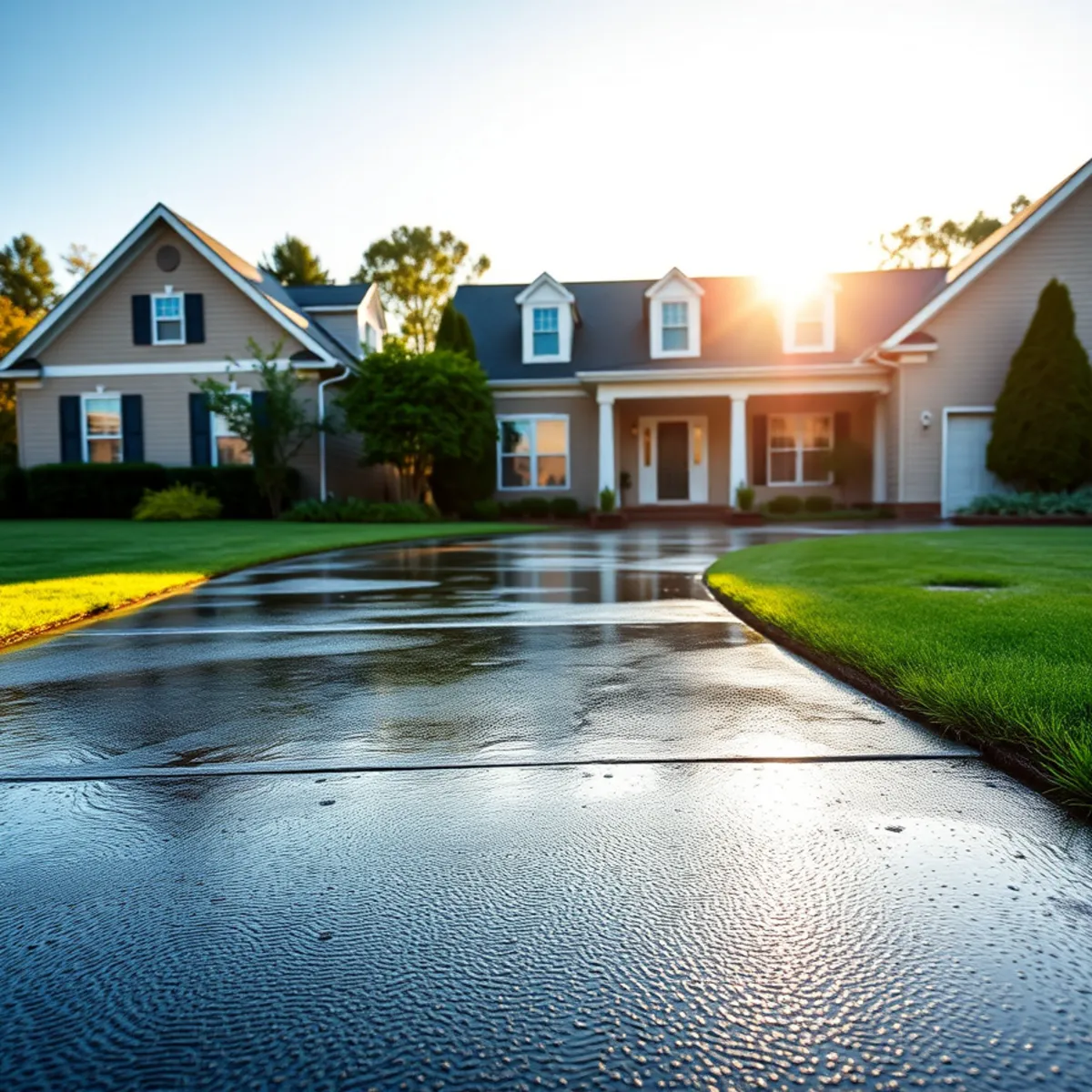
Your driveway is the first thing neighbors and buyers see, and in Lincoln County it takes a beating: red clay washing down off graded lots, green algae creeping in from the shade, spring pollen, and oil drips that won't budge. Rent a wand from the hardware store and you'll either streak the concrete or etch it without ever touching the stain that's actually bothering you. We're a local crew that washes driveways the right way for our Piedmont conditions — matching the cleaner to the stain and the pressure to the surface so your concrete comes back clean and stays that way.
Driveway Cleaning We Handle in Lincolnton and Across Lincoln County
We clean the whole apron, not just the easy middle: the full driveway, the sidewalk, the curb, the street apron, and walkways up to the door. Concrete, asphalt, pavers, brick — we wash all of them, and we adjust the method for each one. Most of our work is residential, but we also handle light commercial lots like small shops and office fronts.
The stains we pull out cover just about everything a Lincolnton driveway collects: Piedmont red clay and iron-oxide rust, motor oil and grease, black tire scuff marks, mold, mildew, algae and lichen, tannin and leaf stains from overhanging oaks, and the white efflorescence bloom that pushes up through concrete. If you want it to last, we offer a clean-and-seal package that protects the surface after we wash it. Estimates are always free, and we cover the whole county — Denver, Iron Station, Maiden, Vale, Stanley, Lowesville, Crouse, Boger City, and the Westport and Lake Norman side.
Why Lincolnton Driveways Turn Orange: Red Clay and Rust
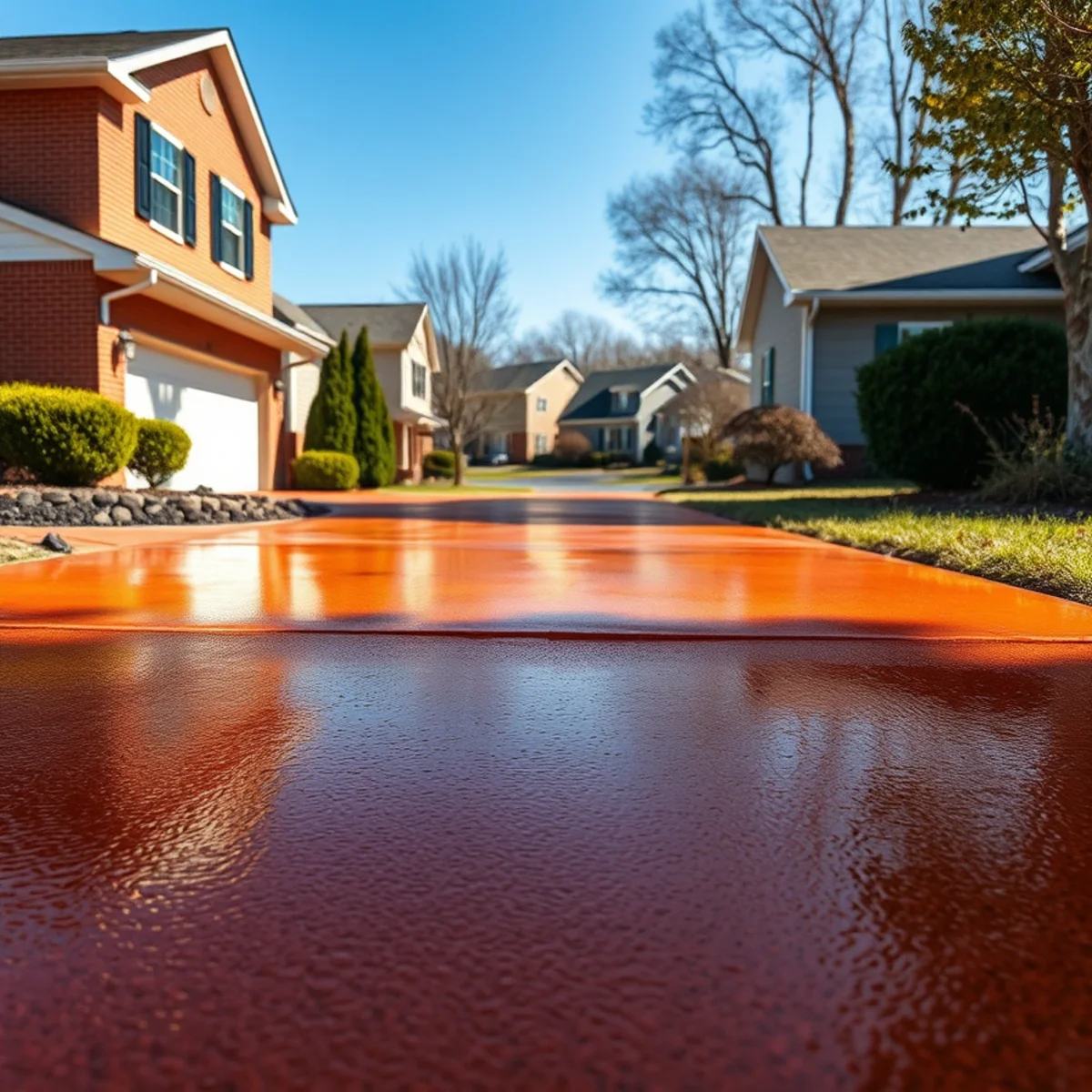
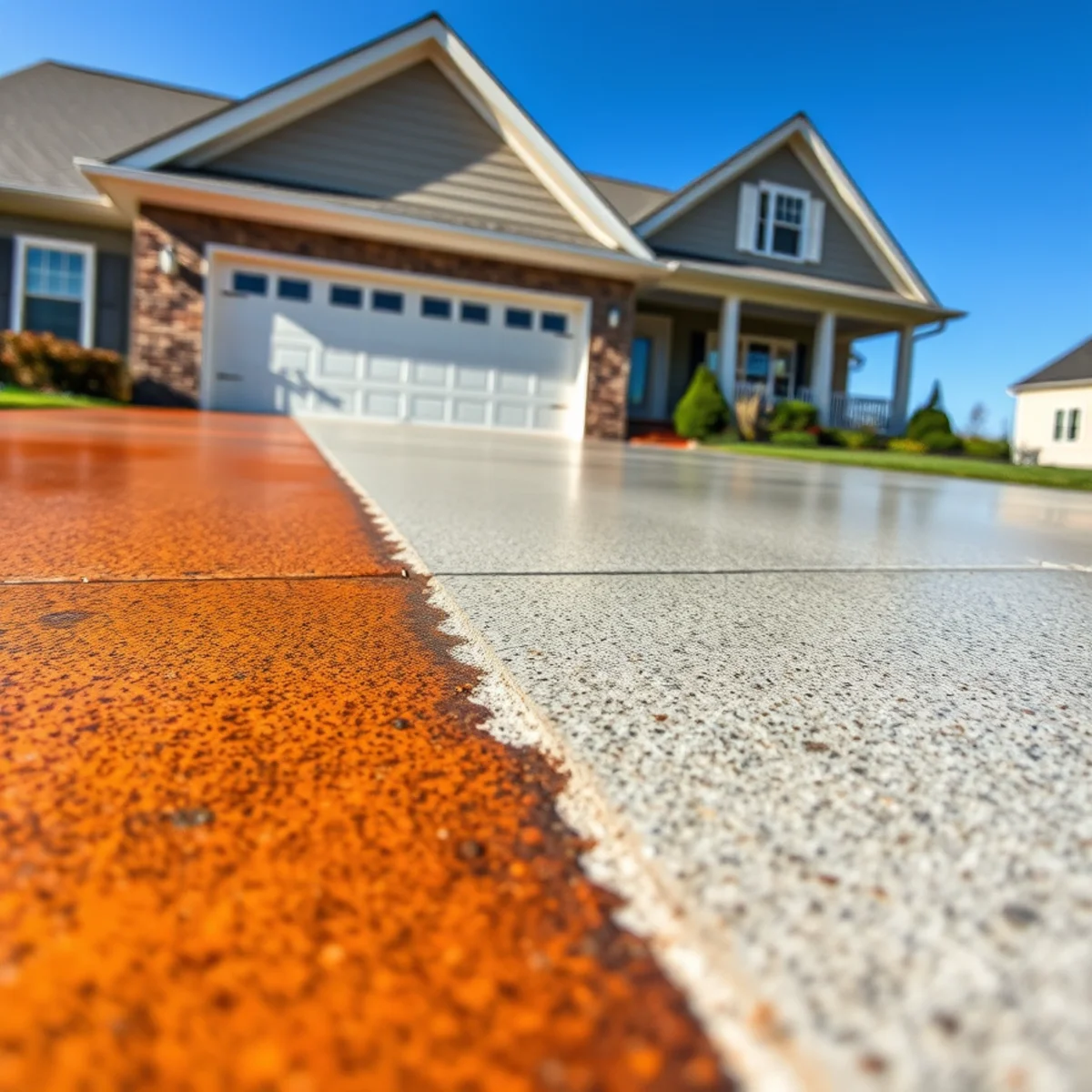
If your driveway has an orange or rust-brown tint, you're looking at Piedmont red clay. That red color is iron oxide — the same stuff as rust — and it's what gives our soil its color all over Lincoln County. The problem with iron oxide is that it's basically insoluble in water. You can rinse a clay-stained slab for an hour and the stain just sits there, because plain water and a pressure wand have nothing to break the chemical bond.
Here's how it gets locked in. Heavy Piedmont rain, lawn irrigation, and landscaping runoff carry ultra-fine clay particles across the concrete. Concrete is porous, so those particles work down into the pores and the iron oxide grabs hold. It's worse on new-construction lots where the yard is freshly graded and bare, and on any driveway that backs up to unpaved or wooded ground where clay gets tracked in on tires and boots.
This is exactly where store-bought driveway cleaner and a rented machine fall short. Most general-purpose detergents are built for organic gunk, not metal-oxide staining. To actually release red clay and rust you need a buffered acid stain remover — typically an oxalic-acid-based cleaner — that converts the iron so it'll rinse away. We size that treatment to the stain so it does its job without chewing up your concrete.
Our Approach: Rotary Surface Cleaner Plus the Right Chemistry
Cleaning a driveway well is two things working together: the correct cleaner and even mechanical agitation. We start by reading the stain. Organic growth like algae and mildew gets a sodium-hypochlorite soft-wash mix with surfactant to hold it on the surface; clay and rust get the buffered acid treatment. We pre-treat and give it dwell time so the chemistry does the heavy lifting before we ever crank up pressure.
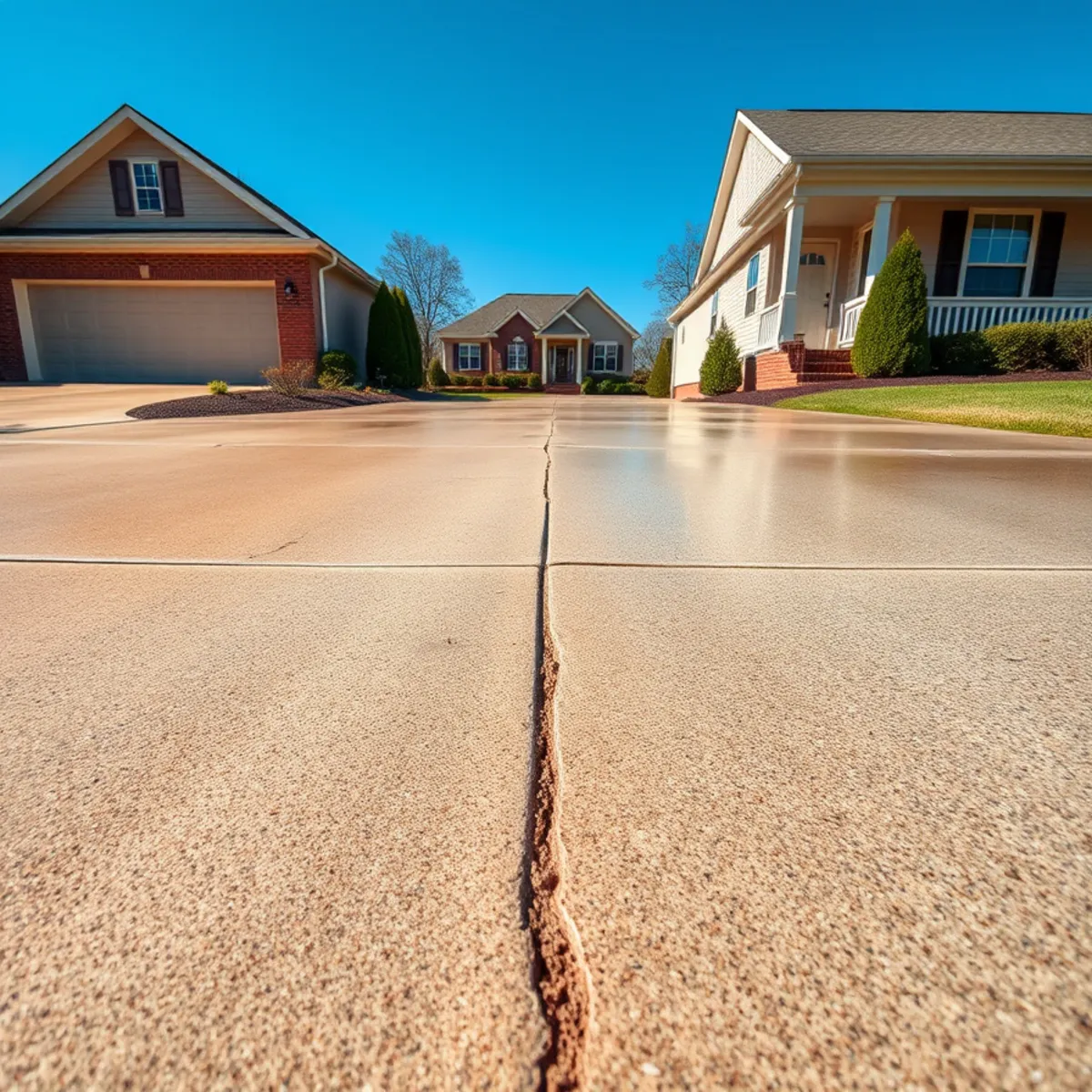
Then we run a commercial rotary surface cleaner — a flat, spinning head usually 16 to 20 inches wide that keeps two nozzles moving at a fixed height. That's the difference between a clean driveway and a zebra-striped one. A surface cleaner gives you even, streak-free results and gets the job done a good deal faster than waving a wand back and forth, with no wand marks. We follow up by detailing the edges, control joints, cracks, and the vertical transitions at the garage and curb with a wand at controlled pressure, so the borders match the field.
To make it last, we finish with a soft-wash post-treatment that kills the remaining mold and algae spores sitting in the pores. Killing the root is why a soft-washed surface stays clean months longer than one that was only blasted. Throughout the wash we protect your property: we wet down grass and plant beds before and after, and we manage the downstream runoff so the rinse water doesn't pool on your landscaping. Biodegradable detergents and runoff control aren't an afterthought for us — they're how we keep your lawn and the storm drains safe.
Pulling Out Oil Stains and Tire Marks
Oil and grease are their own animal. Pressure alone smears a petroleum stain; you have to emulsify it. We hit oil and grease spots with a dedicated degreaser, give it real dwell time to break the bond, and where it helps we bring hot water to lift the petroleum out of the pores. Black tire scuff marks at the top of the driveway get a surface-specific cleaner and some agitation to release the rubber.
We'll also be straight with you about expectations. A fresh drip comes out clean. A spot that's been soaking in for years has migrated deep into the slab, and it may lighten dramatically rather than disappear to zero. We'd rather tell you that up front than oversell you, and a sealer afterward keeps new drips from setting in.
Concrete, Asphalt, Pavers: Different Surfaces, Different Pressure
The fastest way to ruin a driveway is to clean every surface the same way. Concrete is the toughest of the bunch — it handles higher PSI — but it isn't bulletproof. Hold a tight nozzle too close or park the wand in one spot and you'll cause spalling and etching, leaving permanent pitted marks in the surface. Older or weaker pours spall easier, so technique still matters.
Asphalt is a different material entirely. It's softer and held together with a petroleum binder, so high pressure erodes the surface and loosens the aggregate. We clean asphalt driveways with lower pressure and a wider, gentler technique that gets it clean without washing away the binder. Pavers and brick need care of their own: the joints are filled with sand, and aggressive pressure blows that sand out. We work them carefully and let you know if a section needs re-sanding afterward. Matching the method to the material is the whole game, and it's why a trained crew beats a one-size-fits-all rental every time.
Sealing to Keep the Stains From Coming Back
Cleaning solves today's stains. Sealing slows down tomorrow's. A penetrating siloxane or silane sealer soaks into the concrete and fills the pores, so clay, rust, oil, and water can't work their way back down in. On a sealed driveway, the spring pollen film, the summer algae, and the muddy runoff sit on top where the next rinse takes them right off.
Timing matters. We clean first, let the surface dry fully, then seal — sealing over a damp or dirty slab traps the problem underneath. For most Lincoln County driveways, resealing every two to three years keeps the protection fresh, sooner if you've got heavy traffic or full sun exposure. The clean-and-seal package is the move if you're tired of fighting the same stains after every storm.
Is Pressure Washing Safe for Your Driveway?
Yes — when it's done right. Done right means correct PSI and GPM for the surface, a moving rotary surface cleaner instead of a fixed jet, and proper standoff distance. The horror stories you've seen — etched concrete, spalled patches, asphalt washed thin — come from the wrong pressure, the wrong nozzle, or holding the spray in one place too long. That's an operator problem, not a sign that washing is inherently risky.
This is also why we steer clear of raw muriatic acid. It'll strip a stain, but it can burn the cement paste, discolor the slab, scorch your plants, and it's hazardous to handle. We use buffered, controlled cleaners that target the stain instead of attacking the concrete. Pair that with our plant-safe, runoff-managed process and a properly matched surface cleaner, and a professional wash is far safer for your driveway than guessing with a rental.
How Often Should You Clean a Driveway in Lincoln County?
For most homes, once a year keeps things looking sharp. If your driveway sits in shade or under heavy tree cover — common on the wooded lots all over the county — bump that to every eight to twelve months, because Piedmont humidity feeds mold and algae regrowth fast on surfaces that never fully dry out.
The two best windows are spring and fall. A spring wash clears the yellow pollen film off the concrete after pine and oak season coats everything. A fall wash clears the tannin and leaf stains that drop in and bleed brown over the winter. And if you're in a Denver or Lake Norman subdivision, check your HOA covenants — plenty of them require a visibly clean driveway, and a maintenance wash on that spring-fall cadence is a lot cheaper than a violation notice. A simple plan keeps your curb appeal up and the HOA off your back.
Ready to get the red clay, rust, and oil off your driveway for good? We're locally owned right here in Lincolnton, licensed and insured, and we back our work with a written re-clean guarantee. Call or text Caleb and the crew at +1 (351) 242-0666 for a free, no-obligation on-site estimate, and we'll tell you exactly what your driveway needs.

 Concrete & Driveway Cleaning