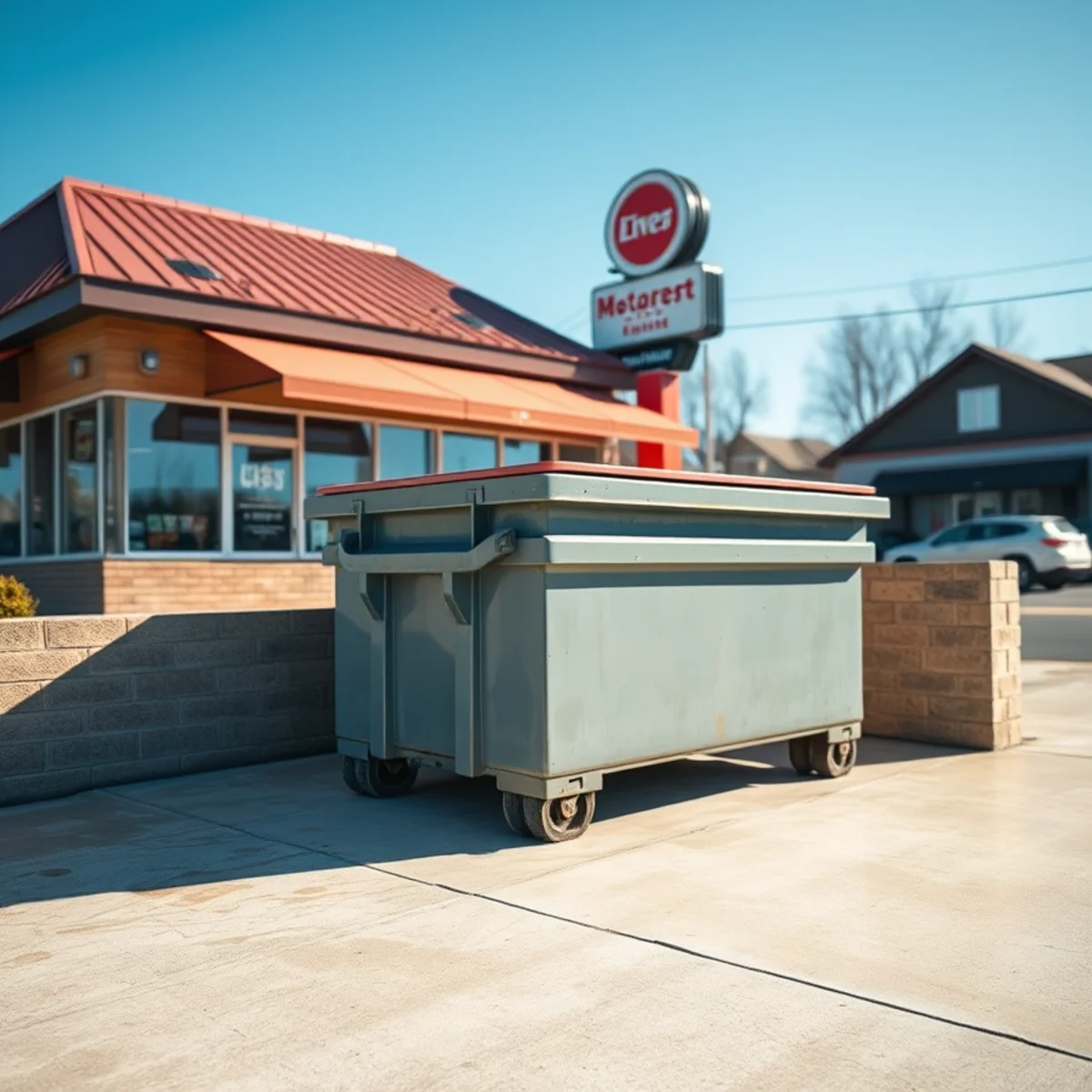
That dumpster pad behind your Lincolnton restaurant is costing you more than you think. Grease bakes into the concrete in our hot, humid Piedmont summers, the smell drifts toward your front door, and rats and flies treat the buildup like a free buffet. Worse, a greasy, debris-covered pad is one of the easiest violations for a Lincoln County health inspector to write up. Left alone, it only gets worse, more grease, more pests, more odor, and a slick, slip-and-fall hazard for your staff. The fix is a proper hot-water degrease and sanitize, done by a local crew who handles the dirty water the right way.
What Dumpster Pad Cleaning Is, and Which Lincolnton Businesses Need It
Let's clear up what this service actually is, because folks search for a few different things. Dumpster pad cleaning is the deep cleaning, degreasing, and sanitizing of the concrete or asphalt slab your dumpster sits on, plus the enclosure walls, gates, bollards, and the splash zones around them. It is not junk removal, and it is not bin or container washing where they clean the inside of the can itself (though we can bundle that). We're talking about the pad, the surface that soaks up years of grease, leachate, and rotting food.
If you run a business in the 28092 or 28093 area, you probably already know if you need it. The pads that get the worst are at restaurants and fast-food spots, grocery and convenience stores, gas stations, apartment complexes, and medical offices. Anyplace food, packaging, or heavy waste flows through a dumpster, the pad underneath turns into a magnet for grease and bacteria. Downtown Lincolnton's restaurant cluster around Court Square and East Water Street sees this constantly, and the shared, multi-tenant enclosures along the Highway 321 and Highway 150 corridors are some of the toughest pads in the county.
The core problem is always the same: grease, leachate (the "dumpster juice" that leaks out of bags), rotting food residue, foul odor, pests, and a slick surface that puts your crew at risk. The outcome we deliver is just as simple, a sanitized, odor-free, inspection-ready pad you don't have to think about.
Why Hot Water and Degreaser Beat a Garden Hose Every Time
Here's where a lot of property managers get burned. They send a maintenance guy out with a garden hose or a cold-water pressure washer, and a week later the grease is back and the smell never left. There's a reason for that, and it comes down to chemistry and heat.
Grease, especially the synthetic and oily kind from a commercial kitchen, doesn't dissolve in cold water. It smears. Cold pressure just pushes it around and drives some of it deeper into porous concrete. Hot water in the 180 to 200 degree range is what actually softens and emulsifies that grease so it can be lifted off the surface instead of relocated.
But heat alone isn't enough. We pre-treat the pad with a sodium hydroxide (caustic) degreaser and give it a real dwell time, usually 15 to 20 minutes, so it can penetrate the concrete and break the bond between the grease and the slab. The strength scales with the buildup: a routine maintenance pad might need around 8 ounces per gallon, while a neglected, grease-caked pad can call for up to 16 ounces per gallon. After the hot-water surface cleaning, a sodium hypochlorite rinse goes down to kill lingering bacteria and mold and brighten the concrete back up. On heavy organic buildup we'll also reach for an enzymatic, biodegradable degreaser that keeps eating residue after we leave.
DIY almost always fails for the same three reasons: no heat, the wrong chemicals, and no plan for the dirty water. The grease comes right back, and you're out the labor for nothing.
Health Inspections, Sanitation, and Your Grade
For any food-service business, this is the part that matters most. The NC Food Code and FDA rules require dumpster pad surfaces to be non-absorbent and kept free of debris, litter, and pooled waste. A pad slick with grease and standing leachate is a textbook inspection point, and it's exactly the kind of thing that pulls points off your grade.
It's not just about the paperwork. Warm, greasy pad conditions are ideal for E. coli, salmonella, listeria, mold, and fungal growth, and our humid Lincoln County summers speed all of it up. When an inspector sees a clean, well-maintained pad, it signals that the rest of your operation is run the same way.
Building a Paper Trail Inspectors Like
One quiet advantage of recurring cleaning is documentation. When we service your pad on a schedule, you have a record of it, dates, before-and-after photos, the whole thing. That documented sanitation history is gold during a Lincoln County Health Department inspection or a corporate audit, and it protects the reputation you've built with your customers. A clean pad isn't just compliance; it's part of the experience.
Grease, Odor, and Pests: The Real Reasons Pads Get Cleaned
Strip away the technical talk and most owners call us for two reasons, the smell and the pests. Both trace back to the same source.
Grease and food residue are long-term food for rats, mice, roaches, flies, and maggots. You can set traps and spray all you want, but if the pad is still coated in residue, you're treating the symptom while the buffet stays open. Removing the food source at the surface does more for pest pressure than any trap line. That sour, foul odor, often a hydrogen sulfide rotten-egg smell, comes from rotting organic matter and bacteria breaking down in the heat. It drifts toward dining areas, entrances, and apartment windows, and it tells every customer something's off before they even walk in.
Then there's safety. Greasy concrete is a documented slip-and-fall liability for your staff hauling trash bags out at the end of a shift. And standing leachate doesn't just smell, it stains and slowly degrades both concrete and asphalt over time, so a neglected pad becomes an expensive repair down the road.
How Often Should a Lincolnton Business Clean Its Pad?
Frequency depends on what flows through your dumpster. As a rule of thumb for our area:
- High-volume restaurants and fast food: weekly to bi-weekly. Grease-heavy kitchens build up fast, especially the downtown Lincolnton eateries.
- Standard commercial, retail, and offices: monthly to quarterly is usually plenty.
A few things push you toward more frequent service: recurring odor complaints, visible grease tracks running off the pad, any pest activity, and the peak of NC summer heat when everything rots faster. Bin volume, leaking bags, and shared multi-tenant enclosures (where you're cleaning up after the neighbors too) all drive it up as well.
Here's the honest math: a recurring maintenance plan costs less per visit than waiting until you need an emergency deep clean or a concrete restoration. Stay ahead of it and the buildup never gets a foothold.
What Dumpster Pad Cleaning Costs Around Lincolnton
Most folks comparison-shopping want a number, so here's a straight answer. A first-time or deep clean on a neglected pad typically runs in the range of $150 to $400 or more, depending on how bad it is. Recurring maintenance visits usually land somewhere between $50 and $250 per visit once the pad is under control.
The price comes down to a handful of factors: the square footage of the pad, how severe the grease is, whether it's a one-time clean or a recurring plan, and the distance and access to your site. Bundling pad cleaning with container or bin washing lowers your per-service cost, and a recurring contract locks in a lower rate while preventing those pricey restoration cleans later. We keep it transparent and come out for a free on-site quote, no guessing games.
EPA Rules, Storm Drains, and Where the Dirty Water Goes
This is the piece most companies skip, and it's the one that can land a property owner in real trouble. Under the Clean Water Act and NPDES rules, you cannot wash grease, degreaser, and food waste into a storm drain. Those drains run straight to creeks and the watershed, and non-compliance can mean steep fines, which usually land on the property owner, not the guy with the hose.
A real crew plans for this. We block and berm the storm drains, use containment mats, and capture the dirty rinse water with water reclamation and vacuum recovery so the wastewater never reaches the waterway. We lean on eco-friendly, biodegradable degreasers wherever the buildup allows, which protects your landscaping and keeps caustic runoff out of the system. For a property manager, compliant wastewater handling isn't a nice-to-have, it's protection from a liability you didn't even know you were carrying.
Why Go With a Local Lincolnton Crew
You could call a national bin-service directory and wait. Or you could call a local outfit that answers the phone and can get on your schedule fast. We're based right here, we know the Lincolnton restaurants and plazas, and we know what Lincoln County health inspectors look for.
We serve Lincolnton plus the surrounding towns, Denver, Maiden, Cherryville, Stanley, and Vale, with spillover into the greater Gastonia, Hickory, and Charlotte metro. We're insured, we run the hot-water rigs and reclaim equipment this work actually requires, and we make recurring scheduling easy with before-and-after photos and a satisfaction guarantee behind every visit. We're your neighbors, and we treat your property like it.
If your pad is greasy, smelly, or you've got an inspection coming, let's knock it out before it becomes a problem. Call Hydro Jet PW at +1 (351) 242-0666 for a free, no-pressure estimate, and we'll come take a look at your pad and give you a straight number.

 Concrete & Driveway Cleaning